Thursday, March 7, 2019

Exploring Argentinian Patagonia around El Calafate (1)


In Dec 2018, I spent about 2 weeks in Argentina and Chile, mostly around the Patagonian region. We trekked around El Calafate and did the W trek in the national park of Torres Del Paine. And then spent a few days in the southernmost city of Ushuaia and four sun-filled relaxed days in the Paris of South America, Buenos Aires. I had to cut short my trip a bit, and my friends also trekked in El Chalten and visited the famous waterfall of Iguazu in the same 2 week trip.

Given how huge the countries are, we ended up taking multiple flights and buses to get from one place to another and spent 2.5 days of our trip mostly travelling across the country. So even though two weeks feels like a long time, even in this long period, we could only explore the south western part of Argentina.

Patagonian landscape
We had an awesome trip and I must say, Patagonia is stunningly picturesque. The views we saw became so commonplace to us that after a point we stopped valuing it when we there. But when we came back, we missed the whole experience for a long time. And Buenos Aires was an absolute delight to explore and experience. So all in all, this trip is a definite recommend from me.


Plan and itinerary

We were visiting both Argentina and Chile (and also Brazil for Iguazu) on this trip. So I had to go and get both visas in London beforehand, which was quite an experience. For Argentina, you could book a visa appointment only by email (in today’s day and age!!). Though the actual process to get the visa was quite simple and easy afterwards, with no charge for Indian citizens. So I had no complaints. For Chile, you had to apply online and then go in person carrying the same documents! Also the embassy did not inform you once your visa was approved and I had to go in person to check whether I could come in for the in-person meeting with the document. The whole online submission almost felt like a waste after that. So be prepared for the slightly funny visa processes if you are planning to go there.

As it was a long trip, we had a very detailed itinerary planned. And we had to make a lot of bookings beforehand to make it work seamlessly. And it did. Below is the itinerary I followed:

Day 0 - 1: Flight from London to Buenos Aires; connecting flight to El Calafate (evening); stay at Hostel Schilling
Day 2: Day trip to Perito Moreno glacier in El Calafate; stay at Boutique Hotel Cantera
Day 3: Bus from El Calafate to Puerto Natales (6 hours); stay at Hotel Natalino
Day 4-7: 4 days W trek / TDP sightseeing
--- Day 4: Drive rental car to Refuge Centro Torres; trek to Base de Las Torres and back; stay overnight at Refuge Centro Torres
--- Day 5: Drive to Pudeto; 9 am catamaran to Paine Grande; trek in Frances Valley to Mirador Britanico and back; stay overnight in Refuge Paine Grande
--- Day 6: Trek up to Glacier Grey; ferry to Hotel Lago Grey; stay overnight at Hotel Lago Grey
--- Day 7: Drive around TDP to explore other spots and return to Puerto Natales; stay at Hotel Aqua Terra
Day 8: Bus transfer from Puerto Natales to Punta Arenas (3 hours); stay at Hotel Great Western Finis Terrace
Day 9: Bus from Punta Arenas to Ushuaia (12 hours); stay at Hotel Canal Beagle
Day 8: Bus transfer from Puerto Natales to Punta Arenas (3 hours); stay at Hotel Great Western Finis Terrace
Day 9: Bus from Punta Arenas to Ushuaia (12 hours); stay at Hotel Canal Beagle
Day 10-11: 2 days in Ushuaia; visit to Penguin Island; trek to lake Esmeralda; stay at Hotel Canal Beagle; flight to Buenos Aires (late night)
Day 12-15: Buenos Aires; flight to London (afternoon); stay at Hotel Park Tower

Puerto Natales
My friends after Day 2 had added 3 days of trekking in El Chalten, which is a must do. And they also spent days 12-13 visiting Iguazu falls. So you can easily add these two places to the itinerary. We spent the right amount of time in all places, so there are not many changes I would do to the plan. But, in hindsight I would say that Ushuaia is missable, and you can probably visit Atacama desert instead.

As this trip was very long and we had lot of free time in between, I started writing the first draft of the blog on the trip itself. So it will be quite detailed. Hopefully it is still as fun to read...


Day 0 - 1: Flight from London to Buenos Aires; connecting flight to El Calafate (evening); stay at Hostel Schilling

First view of Buenos Aires
The flight from London to Buenos Aires was very long, more than 14 hours! Thankfully it was a night flight and I slept through most of it. While landing in BA in the morning, I got a first peek of the city. All around the city, there were fields and small houses. And then came all the high rises right next to the sea. The skies were clear and sunny, it already felt amazing given I was flying out from London in December. It felt like heaven to be back in the sun, almost like being home in India. And I was already looking forward to the vacation.

I was taking a connecting Aerolineas Argentinas flight to El Calafate from the local Aeroparque airport which was about an hour or so away from the international airport. I had some 3 hours between the flights and had to get out of the airport soon. But it turned out that the international airport had some immigration problems and we were made to stand in a very very long queue. I asked 3 of the officials to help me as I had a connecting flight with limited buffer time but they just told me they couldn’t help me and I had to follow the rules. So I just walked in front to the VIP line and sailed through the immigration line quickly 😜.

I then took an Uber to the other airport (which turns out is still illegal in Argentina!). So I had to take the cab from slightly outside the airport building, from the parking lot and had to sit in the front seat. I realised soon that not everyone spoke English here (the Uber driver didn’t) and even the billboards were all in Spanish. It was too late a reminder to me to brush up on the little Spanish I knew.

The drive to the other airport even though through the city, passed through many open and green areas. The roads were amazing and my first impression of Argentina was of a developed country. There was something very attractive about the city, something that was calling out to me. I don’t know what it was but I knew I would love it when I was back there at the end of my trip. I also wondered why India can’t be at least a developed country like Argentina?

The local airport was near the main city, and quite cosy and convenient. It was located right next to the sea on one side, and with a huge park and high-rises on the other side. Even though everyone had said I would easily reach the airport, I still hurried and so made it before time. After check-in, I therefore decided to have my first Argentinian meal - Hard Rock Cafe fajitas in the airport 😁.

Views from the top
The flight to El Calafate was a day flight flying across Argentina. It mostly flew along the East coast of the country and I could see some of the water bodies going inland. We mostly flew over empty green areas and it looked like an agricultural place. And then came waste wastelands lined on one side with huge lakes and snow covered mountains. This was Patagonia, the vast land extending till forever, with limited shrub vegetation.

Views from the top
And then a huge sparkling blue lake came into view, surrounded by snow covered peaks on the other side! I was so amazed by the colours, I was totally mesmerised while in the flight itself. I had a dirty window, else would have got amazing shots of the view. When we landed at El Calafate, it was on a runway right next to another huge blue lake, again lined with snow capped mountains. It felt like I had come to a magical place, far far away...

Lake next to the plane
I took a shuttle from the airport for $7 which dropped all the tourists to their respective hotels. It drove us all along the sparkling blue lake, through the Patagonian shrub-like vegetation all through to El Calafate. And I again knew, I would like this place. Just coming out of the airport into the fresh air, with the smell of the lake and mountains nearby had felt exhilarating by itself. And now with such magnificent views, it was enough for me to fall in love with El Calafate. Oh how much I love and miss nature!

My hostel, Hostel Schilling was quite cosy and convenient, located near the main street. My room got upgraded, so I liked it even more 😁. The owner was very helpful and helped me book my glacier tours for the next day. As it was summer and the sun set only at 11pm, I had a few hours before nightfall. It was also a very warm and sunny day, with temperature in the 20s which rarely happens in this area. So it was perfect to go out for walk and explore the town. And the owner of the hostel told me the best places to go to, to get a good taste of the town.

El Calafate is a very small little place, located on Lake Argentino and popular as the entry town to Patagonia. It has an airport and most tourists fly here to visit some of the nearby glacier parks as well as other Patagonian sights. The town of El Calafate was very small, tourist friendly, convenient and charming. It is quite spread out, with buildings all along a couple of small hills overlooking the lake. And there were some high bare cliffs overlooking the town.

Views of El Calafate
The buildings in the town were all quite small and had tin sheet roofs. Most of the streets were lined with trees with lot of green areas everywhere. The houses could have been in any American town but the setting was unique. The town felt very so charming and cute, with its bare modernity right in the middle of nowhere. When I was there, it was a sunny and warm day, with a deep blue sky studded with clouds, and the sun shining bright - whatay sight it was! And just being there reminded me of my childhood time spent in Kashmir with its small villages, fresh lakes, high peaks and chilly summer weather.

I first found an ATM to take out cash which didn’t charge an atrocious amount just to take out cash 😆. Then I walked towards the lake which was a 20-30 mins walk from my hostel and it was a fabulous path. As I got out of town, I got some fabulous views of the town behind and the bright blue waters of the lake in the front. There were lot of grasslands next to the lake and lot of cows and horses lazing around there.

Views of the lake from the walk
The whole view at sunset was even more picturesque and it was very easy to lose yourself while walking amid nature. And when I got close to the lake, I saw some flamingos standing in the waters of the reserve. I had already fallen in love with Patagonia by then. It felt so fresh, and nice to come back to nature. With its blue skies, the fresh air, greenery around and a feeling of being far away from all of life’s troubles!!

Main street at El Calafate
After spending some time taking in the lake views, I walked through the EL Calafate main street which was lined with shops selling handicrafts and tons of small eating places. It felt quite lively with all the tourists and tons of cars zipping around. I had dinner at an Italian place called San Pedro which had an interesting take on a pizza - with very thick vegetarian toppings! Apparently Argentina is full of Italian migrants and this was an Argentinian version of the pizza developed by the locals. The sun set around 11 pm at this time of the year, so I still had lot of time to explore around. But since I was jet lagged, I called it an early night even though it felt like I wasted valuable vacation time and slept too early 😜.


Day 2: Day trip to Perito Moreno glacier in El Calafate; stay at Boutique Hotel Cantera

Today I was visiting the Perito Moreno glacier which is quite close to El Calafate and the most famous attraction nearby. It is located inside the National Glacier park and you can tour it in multiple way, most of which involve going through a travel agent. You can take a walking tour which takes you on the glacier, or take a boat ride on the lake which stops at multiple glaciers on the way, take a kayak to the glacier and so on.

I chose to take the guided bus tour which takes you to the park and then you can take a boat to very close to the glacier. Taking sunglasses and sunscreen with you was most important for this part of the trip. The day turned out to be warm, bright and sunny, and it enhanced my entire tour unlike my friends who had visited it a few days earlier when it was chilly and windy. Though I still dressed up too warm for the day. And realised later why it was so much more important in these parts of the world to dress up in layers, to be ready for 22 degrees or rain or chilly 5 degree weather!

Patagonian landscape
It was a one hour drive to cover the 80 km distance to the Perito Moreno glacier. We had a guide on the bus who was quite chatty, so I learnt a lot about Patagonia while on the drive. She and the driver kept us entertained all through and it was fascinating to hear them share anecdotes about the country and region. Unlike what I thought earlier, Patagonia is the name for the whole southern part of South America (Chile and Argentina) which covers both the Andes mountains as well as the flat shrub lands. The flatlands are vast and extend all the way from the Andes to the coast, while the Andes separates Argentina and Chile, with a little bit of coastal land on the Chile side. The flatlands are boring and have the same view for 100s of miles. It is all covered in small shrubs (with some flowers at times) and the landscape doesn't change much.

Driving through Patagonia
And surprisingly, all this land is owned by huge rich farmers. And so you will notice that all this bare shrub land is fenced, everywhere. And after few miles, whenever you see a group of trees, it generally means that the farmhouse is located right within the trees, with the trees breaking the wind and providing protection to the house. This whole region was owned by the natives earlier. And then the government starting giving incentives to the new immigrants to go and settle in Patagonia. Whoever went there and farmed the land could become the owner of the land in 13 years. So 1000s of people migrated from similar hardy cold countries like England and Norway to Patagonia, farmed for a few years and soon became owners of all this land.

They built these huge fenced farms and made this region their home. They started with rearing sheep, cows and horses on these farms. However, the sheep caused land erosion with their feet which were not suited to the vegetation and soil of the region, and soon Patagonia turned into a desert, reducing its ability to support large numbers of farm animals. And now the income from sheep rearing has dropped a lot in this region.

The weather in Patagonia in winter is harsh. It gets very cold and everyone has to deal with a metre of snow most of winter. Even in summer, it is generally cool-ish and windy all the time. The weather is generally said to be very variable even within a day, changing from being cloudy and very windy (its a part of their lives) to raining suddenly to become sunny and warm within no time. Of course when I was visiting, it was a warm, bright and sunny day at 22 degrees and was not a typical Patagonian day (something the guide reminded us at least 10 times during the day).

Patagonia was totally covered with ice 1000s of years ago, which created a lot of the features that we see today. Now, the whole region has more than 200 glaciers one of which was the Perito Moreno. It was part of the Patagonian ice fields which go on for 100s of kms. It is the water from all these glaciers that melts into the Argentino lake next to El Calafate. The lake is about 65 kms long and it has a milky white colour because of all the sediments that flow into it from the melting waters from the glaciers.

We got to see loads of fascinating views along the drive to the glacier. While leaving El Calafate, we passed by some wetlands next to Lago Argentino and they were full of birds, including flamingos, swans, geese etc. During summer, the wetlands are flooded with water, but right now it was dry and full of horses, cows and migratory birds grazing there. There were loads of pink flamingos here who migrate here every year from as far as the Atacama desert and Bolivia. Apparently, It was still the nesting period for them back home but the singles or the too old ones were the ones who come here this time of the year 😆.

Beautiful landscape on the way
Once out of El Calafate, we drove next to Lago Argentino for some time. We could see the snow covered Andes across the blue lake on one side and bare small mountains on the other side. Then we drove through the typical Patagonian flatlands with small bushes on both sides. Along the drive we saw an eagle and a few caranchos. Other than that, they have some major wildlife like puma, skunk, llama (guanaco) and armadillos in the mountains though we did not see any of that. The drive was quite picturesque and every turn here felt like a photo opportunity. We even stopped at one location to take photos of the lake and the mountains, and it was breathtaking! The guide then showed us a few local plants like the calafate berries and their uses. She also showed us the matte tea which is drunk all day by the locals.

After the informative drive, we then entered the park, known as Parque Nacional de Glaciares. The entry fee to the park is 700 pesos. Once inside, we could see more Andean forest vegetation all around unlike the Patagonian shrub land we had left behind. The park has many glaciers, though we were only visiting Perito Moreno on the tour.

View of Perito from far
Perito Morena is one of the most easily accessible of the glaciers in this region (by car, boat and bike!) and hence one of the most famous ones. It is huge though not the biggest around here, with an area of 250 square km, even more than the city of Buenos Aires! The height of the face we see was 70 feet above water and 220 below, though it did not feel like that. It moves 2 meters every day but is currently in equilibrium and it stays the same for years.

The glacier sometimes splits the lake into two, and when more water fills in the lake, it goes over the glacier and the two parts of the lakes meet again. It has happened a few times in the last 100 years or so. There are two sides to the glacier, the north and the south side. The north one is less high and you can see it from the trail on the mountain just opposite. And you can see the south side from the boat.

Perito Moreno from the trail
We first got a view of the glacier at a viewpoint from very far. And then we drove closer to the mountain across it where there are a few trails you can walk on to get a closer look at the glacier from different angles. I walked along the trail for a bit and enjoyed getting up close to the glacier. The ice at places looked quite blue. And you can see loads of peaks on top of the glacier. It is much bigger than what it feels though. And looking at the edge of the glacier, also made me realise how the wall in Game of Thrones would have felt like!

Icebergs in the lake
Quite often, you can also hear a thunder like sound which comes from carving - when some of the ice breaks away from the glacier and falls into the water making a loud sound, as the ice dissipates in the water, even creating icebergs on the way. I saw two such big falls and the whole experience felt surreal. It is almost like the Game of Thrones wall falling apart, and can be very scary if you are up close. Sometimes, you don’t even see the ice breaking but can only hear the sound it makes. It is from all this carving itself that small icebergs are created in the lake, and we saw a few of them floating around.

North edge of the glacier
The views of the glacier were quite fascinating and you can easily spend 3-4 hours walking along the viewpoints to explore and appreciate the glacier. There is also a cafe there where you can have lunch. After the walk, I took a ferry ride which costs 800 pesos and takes you up close to the glacier. Before getting onto the ferry, I filled my bottle with water to drink from a stream coming into the lake. Even though the weather that day was hot, the water in the lake was very cold and apparently it is about 4-5 degrees all year round.

Glacier from the boat
The boat ride was about 45 mins and takes you to up to 300m from glacier. From the boat, you can see more ice carving, though its good to be a bit far away from it. You can also see the structures of the glacier as well as the deep blue inside more up close. It also got materially colder and windier when we were in the lake on the boat.

Once we finished the boat ride, the bus picked us up and dropped us back at our hotel by 5pm. There is also a museum on glaciers on the way, called the glacirium which some people visited. It had been an amazing day for me and I loved the visit to the glacier. The brilliant weather had also helped as everyone said, its never so warm in Patagonia.

Once back in town, I shifted to my second hotel in the evening, the La Cantera which was on top of a hill. They had a lake view from there which was awesome. And a few birds wandering around in their premise. It was definitely a more high end hotel than my hostel of the previous day. They even sent a shuttle to pick you up from your restaurant if you go to the city centre for dinner. We had dinner at Pura Vida which was one of the few vegetarian friendly restaurants in the city, and as usual called in an early night, much before the sun set.


Day 3: Bus from El Calafate to Puerto Natales (6 hours); stay at Hotel Natalino

Most of the days we were in Patagonia, we woke up every morning to the sound of birds chirping outside our windows. And this day was no different. And then the faraway morning views of the lake from the room window was very refreshing to wake up to. The day today was mostly spent in bus travel from El Calafate to Puerto Natales in Chile (from where we would have gone onward to the park of Torres Del Paine).

We had looked at renting a car but it was proving to be a nightmare given it was an international rental, and so we were taking a local bus. The bus station was almost outside town and had buses running to a lot of locations. The whole bus network felt quite well developed and convenient. We had bought our bus tickets only 2 days before and easily got seats. Our bus was also very convenient, with double-decker space, reclining seats and footrests for the long journey.

Purple flowers on the way
The drive to Puerto Natales was about 8 hours in total with two hours spent in crossing the Argentina-Chile border. The roads were great and the bus drove very smoothly. In fact, I thought the bus was driving at 40 kmph while it was at 90 kmph! The landscape on the drive was the typical boring Patagonian landscape of bushes, fences, houses with trees around them, some sheep and some small streams here and there. On the way, there were a lot of these typical flowers though (mostly purple on this segment) on both sides. The weather was awesome the whole way, very sunny and warm. It was a longish and boring journey though and I slept through most of it, getting ready for the loads of trekking that was going to come our way soon.

Crossing into Chile
On the drive, we had to go through the Argentinian immigration checkpoint first at Villa Dorotea and then the Chilean one where we even got our luggage checked. Then we went up and down the Andes mountains, and after crossing to the Chilean side, the landscape changed dramatically. There was more greenery, loads more flowers and many horses on this side of the mountains. And the Andes felt very narrow at this point.

Once in Chile, we quickly reached the town of Puerto Natales. We checked in at the Natalino hotel which was a very small boutique hotel and quite comfortable. It had a small pool on the top floor with an impressive to view of the town, of the roofs and sea and the mountains beyond.

Puerto Natales is located close to the coast with the mountains visible from most of the city. The town is not on the ocean itself, but has lot of backwaters coming in right next to it. My first impression of the town was not very positive. It was bigger than El Calafate, and more spread out but was not as pretty or charming. It had 1-2 floor buildings all spread out.

In fact it felt very industrial in certain areas and doesn’t have much to offer other than being the entry point to Torres Del Paine. Its location though is pretty, right next to the water and mountains, and if it was in Europe, I am sure it would have been beautified and looked prettier. We walked to a few of the central streets and they were all full of shops and travel agents for tourists, all lined with trees. Even though there wasn’t much to see, it still felt nice to walk around in the sun.

Along the waterfront
We had lunch at an awesome restaurant called Cafe Kaiken. It had one of the best service I have seen in a small restaurant and the food was tasty. After lunch, I shopped for some clothes from town, just like that! And then we all walked along the waterfront but it wasn’t much to write home about. We visited a local supermarket to stock up on food for the trekking ahead, and it felt very normal.

Xmas celebrations in Puerto Natales
As in Argentina, Chile felt quite cheap, for taxis and food but most places only took cash which was a bit of a problem. We again withdrew some cash and paid the 5% charge on cash withdrawals (same as in Argentina). We passed by a few churches when going back to our hotel. And given it was soon to be Christmas time, we also passed by a local trailer which was showcasing the birth of Jesus, with children playing the roles.

As with most of our trip, we had 3 tough days of trekking ahead, so we again called it an early night. Which was tough as always as the sun didn’t set till 10 pm! And it was tough to call it a day and sleep so soon.

Patagonia around TDP (2)
Argentinian cities of Ushuaia and Buenos Aires (3)


Thursday, February 21, 2019

Diwali in India and visit to Sangam at Allahabad


Diwali in Delhi

Diwali at home
Last year, after many years (8 years actually!) I got to celebrate Diwali at home in India. And even though all these years, I have been celebrating Diwali abroad, being at home made me realise that what we were doing wasn't really the real thing. So many years of being away had blurred our memories and we thought it was enough to have dinner, games and fireworks on the Diwali weekend with friends. And that's all there was to Diwali 😊.

So on my trip back home this time, we went the whole way, celebrating Diwali as it is supposed to be celebrated. We decorated our home with flowers and lights all over, from top to bottom. And made a few rangoli around. I also made my first one ever with colours and realised that even the easier looking ones take so much effort to make.

We ended up going to the bazaar almost everyday and I realised how there was a flurry of activity all the time everywhere. It was all so lively everywhere we went, all lighted up, flowers everywhere, small stalls outside the markets selling sweets, rangoli colours, decorations and so on. And mehendi artists sitting everywhere. I even got mehendi done this time. There were sadly no fireworks this time though because of the court ban, which was quite sad.

Random haveli
We even went to Chandni Chowk one of the days for some shopping and I was impressed. Chandni Chowk is a world by itself, with its narrow gullys, its unlimited shops, its hidden gems and old havelis that you come across in the middle of nowhere and its feel of being from a different century altogether. I loved the feeling of being there, soaking in all the sights and experiences. I did feel like a tourist in my own country, taking photos as I walked along. But it is what it is.

Gullys of Chandni Chowk


Diwali wares being sold
But on top of the usual Chandni Chowk feel, the whole area was full of Diwali roadside stalls coming up everywhere, selling colourful statues and decorations for Diwali. And we also ran into one of the streets which was decorated so beautifully with flowers, apparently it is a thing to come and see. We also spotted some hijras coming and taking donations from the shop keepers, even doing a small performance for them. It was quite an interesting experience and I loved being there.

Decorations being sold
Decorated street in Chandni Chowk


Around Diwali time, everything was decorated everywhere and all lighted up. Malls and shops were full of gift offers and discounts to encourage shoppers. Houses you drove past were all twinkling with lights. Everyone was our shopping for gifts and new things for the house. Friends and family came visiting and it was nice to meet everyone. It felt like the whole of the country was lively suddenly. Its how christmas time is in the West. And something I had missed around Diwali time for so long.

Rangoli
On Diwali day, we did an elaborate pooja which is much more than what we do in London. And then burnt a few of the fireworks we had manage to source. Till a day before Diwali, there weren't many fireworks going off and it it did not even feel that Diwali was approaching. On the day though, it looked like lot of people broke the ban and celebrated the festival how they are used to celebrating. And till very late. The next morning though, the roads were all empty for a long time as everyone woke up late. The whole experience of being back and experiencing the real Diwali felt almost surreal and amazing. And I decided that I should try to get back home for it as much as possible.


Visit to Allahabad and Sangam

Last year, I also got a chance to visit Allahabad and take a dip in the holy Sangam. My parents have stayed in Allahabad before and I have been to Sangam countless times. But there is something still very calming and inviting about visiting the Jamuna and Ganga again and again. It never gets old.

We went to Allahabad by train and I was travelling in Indian trains after 5 years. I was quite surprised to see that the train station at New Delhi hasn't changed at all since then. It is the same, and nothing has improved since then. Being in a train station always had an excitement linked to it for me. As the visit to the station meant we were moving or travelling to another part of the country. And were ready for adventure. And this time too, I felt the same excitement all over again.

The city of Allahabad hasnt changed at all in the 10 years since my parents moved away from there. Even the name which had been recently changed to Prayagraj hadn't taken roots yet 😁. The air was definitely cleaner and fresher given we were coming from Delhi. But otherwise, it felt the same - the same run down buildings, the same busy bazaars, the same crowded roads the same slow pace of life and so on.

There are many pretty buildings in the city from British times - the high court, a few churches and some colleges. Some of them are maintained but a lot are not. And other than these places, the city doesn't feel pretty at all. I wonder so many times how will my country ever reach the Western standards if the cities are not constantly improving?

A church on the way
And the people felt the same to me too. Its a bit of stereotype, but the image is that people in UP always talked too much and argued too much. And were quite lazy overall. And we saw the same on this trip too. The auto guys kept arguing for no reason, ours did because we did not know the way to where we were going. I was actually laughing by the amount he complained because of that 😆.

We first spent some time in the Cantt area which is always pleasing and the best part of any town for me. With its green open roads lined with trees, huge British bungalows and huge gardens around them, plus cleanliness everywhere - its where I come and catch a breath, whether its in Allahabad or Delhi.

The bungalows in Allahabad Cantt have a very interesting history. These were built by the British but before they left India, they leased a lot of them for 99 years at minimum rent to civilians, right in the middle of the Army areas. The Army owned bungalows are well maintained but the ones owned by civilians lie in dilapidated conditions given the amount of resources required to repair and maintain them. Also there are restrictions on what you can and cannot do to these bungalows. But the ones which are maintained look so charming, I wish I had a few photos of them with me to share.

Boats to go to Sangam
After that, we went to visit Sangam. We took the e-rickshaws which have become the common mode of transport now. The road to Sangam is lined with some pretty buildings from the past, huge colleges set in sprawling lawns which if maintained would look very picturesque. But all of them are rundown now. Also most of the roads on the way were being constructed and there was a lot of dust in the air.

Akbar fort
At Sangam, we first took a boat ride for a couple of hours. The Jamuna always has more water than the Ganga and hence its easy to row a boat here. So the boatmen take you on the Jamuna for a bit till the bridge to Naini, along Akbar's fort. The fort is very imposing and provides many mesmerising shots all along the river.

Sunset and the bridge on Jamuna
There were a few seagulls flying above but mostly, it was very quiet there the whole time with only a few boats on the water. The whole area felt so serene and almost spiritual, I could have stayed there for a long time. With the boat slowly gliding on the water, and all you have around is a vast river with a lot of history and stories about it. It was lovely. We experienced a very serene sunset from the boat, and the silence around it was perfect to enjoy such a fascinating scene.

Boats on Sangam
And then we went to the Sangam which was more crowded than Jamuna. It is said that Jamuna is the elder, deeper and calmer sister, while Ganga is the younger chanchal sister. At the Sangam, you can clearly see the waters from the two different rivers merging given the different shades of the water. Ganga has a lot less water and is very muddy, so it was very shallow at the Sangam. There were a lot more boats and people there, though not as many as there would be in Kumbh. We washed our hands in the water but did not take a dip as it was too less water and felt muddy.

Near Sangam
After the Sangam, we stopped at the Akshay Vat temple which was earlier located within Akbar's fort and was under Army control but now is open to the public. The tree is supposed to be eternal and existing from Ramayan times. We also visited the Patalpuri temple which was underground and had always been closed, but only recently been opened to public. Last we visited the 'Sleeping Hanumanji' temple. All these temples have a long and holy history. And I love visiting places of culture and religion everywhere. But I do always wish Hindu temples were better maintained and cleaner than they are. That would make the whole place a lot more spiritual than it currently feels.

The whole area around Sangam was getting ready for Kumbh and we could see the infrastructure being put into place for the whole event. It was also being said that a lot of construction work was going on in the city for the upcoming Kumbh. Apparently there was no labour available for doing other work either! And the city would be a different place by then, a smart city:). Tall promises, but our countrymen are always hopeful 😜. I dont know if things really changed or not, but I do hope that Allahabad changes a bit. Its not encouraging to see a city the same in 10 years!


Tuesday, February 19, 2019

The glamourous ski resort of St Moritz


St Moritz is quite a popular and famous ski resort in Switzerland, known as a very exclusive and fancy place. We somehow landed up there without really understanding what we were signing up for. It was a bit pricier than other ski resorts that we have been to, but we could not figure out why! The slopes there were definitely more wider and less crowded. And the snow and weather was great when we went. But I don’t think that’s it what drives its price tag. But what that is, I still haven’t figured out!

Getting there and back

We took a flight to Zurich and drove about 3 hours to St Moritz. While going, it snowed in London as well as Zurich, and much more heavily all the way till St Moritz. Our flight had got delayed while taking off from London, so we got pretty late by the time we rented the cars and were on our way to St Moritz. It was dark all the way, so we couldn’t really see anything around. But of course we could make out the small cute villages we drove through, the high mountains around us, and everything covered in white all around - am sure it would look stunning during the day.

It also kept snowing during the night, so we had to put snow chains on the way. We of course had no clue how to do that, but when we stopped on the side of the road, a few guys there realised too that we had no clue and offered to help us out!! It turned out as a life saver for us as the last 1-1.5 hours of travel was through narrow roads ascending the mountains, covered with up to a feet of snow and it would have been tough to drive without snow chains. In fact once we reached our airbnb in St Moritz, our car did get stuck in 2-3 feet of snow right next to our place. Thankfully we were able to get it out, but still we were awed by the amount of snow all around.

Drive back through Swiss Alps
On the way back, we drove during light hours and saw the pretty Swiss Alps countryside. We passed through loads of small villages, some huge valleys and passes, huge lakes and high snow covered mountains and forests - they all made for mesmerising views. Everything was covered with snow and looked totally heavenly and calm. Also part of Zurich town which runs all along the lake was twinkling by the time we reached Zurich and looked scintillating and christmas-ey.

Slopes and skiing

The slopes at St Moritz are amazing. They are a lot easier than other resorts, very gentle and much much wider. So it felt so much easier skiing there as a beginner. Also when we were there, there were quite less crowds. It might have been because it was snowing the first two days, or because it’s an expensive resort. But it was very easy to practice and learn skiing, and enjoy it all along 😊.

Around St Moritz, there is lot of cross-country skiing and we saw a few people coming back with their cross-country skis in the afternoons. There is a lot of off piste skiing too and it seemed not too dangerous around here given the lack of trees on the top of the mountains. In fact, we saw two people coming down a mountain off-piste from one of the gondolas and it looked so stunning. Seeing a small dot moving at fast speed down a mountain and creating a zig-zag track in the snow as it comes down. It was a priceless moment, something I have seen many times on television but for the first time in real.

The peaks
The first day it was cloudy and there were lots of moguls. And a lot of the lifts on the top of the mountains were closed. The second day it was snowing a lot and very foggy, cloudy and windy the whole day making it tough to see. But the slopes and the snow that day was amazing to snow on. It even made it possible for me to try red and blue slopes, it was so good. And the last two days, it was sunny the whole day giving us some fabulous panoramic views of the high mountains around, of the lake and villages in the valley and an airport far off. The sunny days were colder than the others but overall, the weather was never too cold.

Just limited to St Moritz, the length of ski slopes felt little less than resorts like Kitzbuhel and St Anton. But apparently, there are a few other resorts just 15-20 mins bus rides away which have a lot more kms of runs. The slopes at St Moritz have lot of gondolas, funiculars and lifts running, but I found the infrastructure there a bit dated. Also, the main gondolas and funicular have 10-15 minute gaps between each of them. Which took a lot of time to get moving and also meant that each of them was filled up to capacity before it would move. And they had no place to sit inside either! The places to eat on the slopes are also just about ok. They all served average and high cost food. So I am still wondering why it is so pricey!

The slopes
But altogether, I loved the resort and totally enjoyed skiing there. The views from the top of the valley and lake were impressive. As well as the mountains all around. And with the sun above, and skiing at top speeds down steep slopes, it actually felt like I was in fast-track heaven 😜. We skied for 4 days, every day from 10 am - 4pm, with a break for lunch and skiing directly back to our airbnb. I did some very small spells of off-piste (while connecting between runs not connected) and it was amazing given the fresh snow. So all in all, a great experience.

The village and around

St Moritz from the top
The twin villages of St Moritz Dorf and St Moritz Bad are located around a lake, which right now was frozen. It was a charming resort, with a couple of high-rises but mostly small wooden alpine houses. And they all looked very cosy and cute, covered with snow all over. We went to the city centre one day after skiing and were surprised to see it all dead. There weren’t a lot of restaurants and clubs open as you would expect in a ski resort. But there were loads of high end brands everywhere, so clearly people shopped here but didn’t really party. We did see a lot of people in fur coats and dressed expensively though. The lake was frozen right now but might be fun for water sports in summer. And there were a few places to visit and activities to do around the place. But honestly, I still wonder why its such an expensive resort, someone please help me figure that out!

Accommodation

Our airbnb was a huge apartment in the village of St Moritz - Bad, located very near the lift. It was amazingly convenient to just walk to the lift and the ski slopes whenever you wanted to get out in the morning. In fact, we even skied to the front of our gate in the evenings. There was a small rivulet flowing right in front with a little bridge. And small icebergs floating in the water. And on the other side of our apartment, we could see the well-lighted and expensive Kempinski hotel. So it was quite cosy and picturesque all around, and a very good location.


All in all, turned out to be a great skiing weekend, with great weather, inviting slopes, huge improvements in skiing skills and no big mess-ups. Yay for St Moritz!!


Wednesday, January 23, 2019

Caribbean diaries (4) - Jamaica (Negril, Kingston and around)


Caribbean diaries (1) - Haiti, Trinidad, Martinique
Caribbean diaries (2) - Panama City, El Salvador
Caribbean diaries (3) - Ocho Rios, Port Antonio (Jamaica)

Negril


The warm Caribbean waters
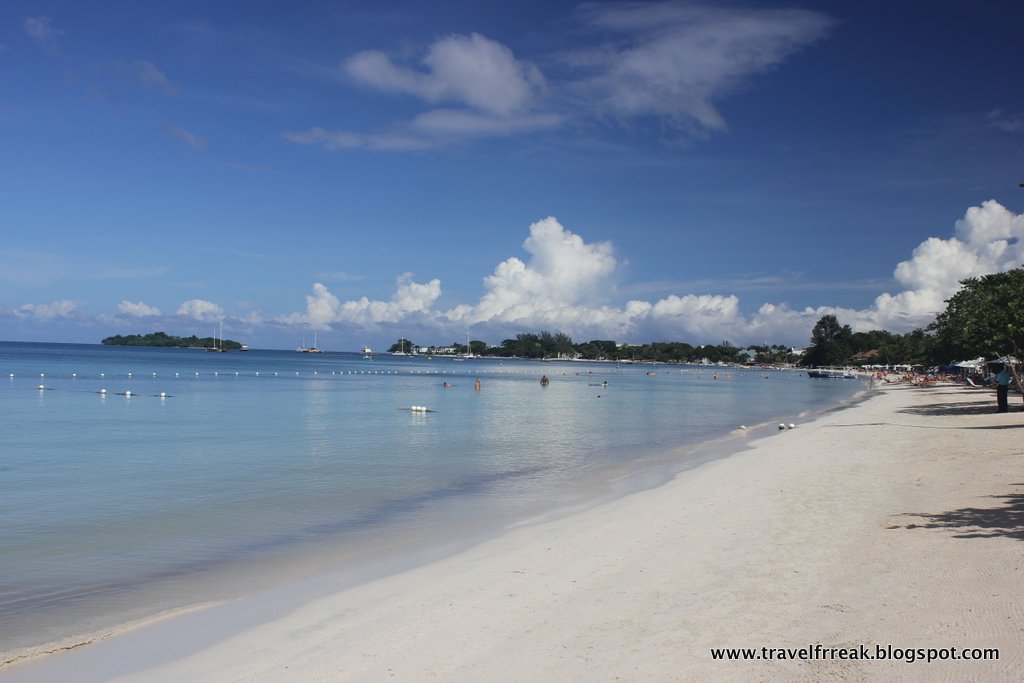
The Negril resort area is supposed to have the best beaches in Jamaica among all the resort towns. And during my first two months in Kingston, I was unable to go there as it was a 3-4 hour drive away. But finally, on my recent trip back to Jamaica, I made it there. And I was impressed. The 7-mile beach is definitely worth all the hype around it.

Negril is located on the north western edge of the island. Again, while going we took one route and while coming back a different one. So all in all, I have ended up driving all around the island of Jamaica 😊 (Route map at the bottom).

Our drive to Negril was through the interiors of the island. We stopped at the town of Mandeville on the way for a snack break and walked to the local Burger King for a quick burger and to the local mall to buy food for the trip. It was an interesting stop, especially as everyone warns you that Jamaica is unsafe. But walking to a random town did not feel unsafe at all.

Bamboo pathway
On the way, we passed through a lot of small towns and villages, and as usual, there were loads of churches and colourful houses on the way. And we noticed many locals just sitting on the side of the roads and chilling. We also saw lot of hawkers on the roadside selling different local fruits. We should have stopped and bought some of the healthy stuff, but Jamaica is made out to be so unsafe, that we resisted. We also noticed that lot of the towns had grand and huge luxurious houses up on the hills. I am guessing, these are all holiday homes of the rich. On the way, we also came across a pathway of bamboo on both sides of the road which was quite a fascinating sight. We were brave enough to get out and take a few photos there 😜.

The drive was beautiful - through foggy mountains and green forests, valleys and next to the sea, bamboo covered roads and narrow roads through the jungles. We saw loads of picturesque vistas and a striking sunset on the way. Everything was so fresh after the rain and very very green. We kept the windows open and loud music at times. It was an amazing drive. People were driving very badly on the single lane roads though. And we had to be extremely careful and focussed all the time.

Also right before our coastal drive to Negril, we ran into a huge accident on the road. This was on a one way road, and we ended up wasting an hour in the traffic jam there. So the whole drive took us 6.5 hours instead of 4! As when we had started, we had got lost in Kingston too and drove around in circles. So we landed at our resort pretty late at night.

Negril is famous for its 7-mile beach and most of the resorts are located on the beach itself. We however stayed a bit far at the Spa Boutique hotel. It is a popular resort known for providing a nice private experience to its residents, away from the crowds and noise of the 7-mile beach. And we all totally loved our stay there. And in keeping with my tradition of not leaving my Jamaican resorts much, it was pretty much the same for me in Negril also 😋.

Sunrise from the terrace
The resort is located on a cliff, with lot of rocks along the water. And inside, it was all very green, with the bungalows hiding in between them the trees. Most of the bungalows were two storeys and we got the terrace rooms which had a heavenly view of the sea especially during sunrise. I was planning to sleep in but when I saw the view outside at 6 am, I had to give up on my sleep and come out and read a book, enjoying the freshness around. The sea, the sunrise, the greenery and the water. It felt like heaven. And given how far the resort was from the crowds and there was so much greenery, it was able to give you the feel that you were all alone there, which I totally loved.

Pool during sunset
The resort had a small artificial beach on the cliff, a nice outside pool overlooking the sea and lots of sunbeds and hammocks next to it. Just outside on the rocks next to the sea, there were loads of crabs, and pelicans were coming and swooping to find prey. You could also see fishes in the water if you walked on the rocks.

They also had great snorkelling right next to the cliff which was fun. I saw crabs, sea urchins, star fish, a small ray, long bottlenose fish, dead corals and loads of blue, yellow and other coloured fishes while snorkelling there. Snorkelling was definitely better in the afternoon than the morning though. The water was so warm, it felt perfect. Not just for snorkelling, but for swimming too.

They also had a nice spa in the resort, though please note that the massage tents were near the sea but pretty much in the open. So you need to be careful who is around. They also had a nice in-house terrace restaurant right next to the sea where we had a few tasty meals. It had a very picturesque setting, with chairs right next to the sea. And looked stunning, especially at night when it was all lighted up and you could see the faraway lights of the 7-mile beach. But the restaurant closed at 10, so you always had to hurry 😁.

The staff in the resort was cheerful and helpful always. And they made you feel like you were there alone. You can stay at a place like this forever and not do anything, which is what most of us did except the youngest in our group who went to 7-mile beach both the days 😁.

On the Saturday, we finally went out of the resort for dinner to the Island Lux beach park which was on the 7-mile beach and had a very nice ambience to it. We ate at the seafood restaurant, which was a nice place, well lighted with a good lively ambience, right next to the beach and had good seafood too. So we liked it. It was a bit empty though given this was not tourist season in Jamaica.

The 7 mile beach
The next day I finally did go to the 7-mile beach - it is actually a sandy beach for 7 whole miles! The drive till there felt luxurious, with green palms on both sides and huge resorts lining the road. The beach was fantastic, with blue waters, blue skies, white sand and warm waters. But the beach wasn't nice to just hangout as all the resorts are all-inclusive and you can't just go and eat anywhere. Also they are a bit rude and even though the beaches are public, they treat them as their private ones. And stop anyone walking along. So it was a bit annoying.

Relaxation
Otherwise, there were lot of water sports, some nice sea food places including one place on the boardwalk where you decide the lobster you eat and so on. It was too hot and humid though and staying in the shade felt welcome. I spent some time on the beach and just alternated between relaxing and swimming.

Overall, the weather was quite perfect. It rained every afternoon while we were there, and the sunsets were pretty given there were clouds and they played games with the light. It was much hotter in the day and cooler in the evening. But overall, it was very comfortable the whole day.

The drive back to Kingston though was very different and more comfortable than on our way to Negril. We took the highway along the north of the island, to Montego Bay, Ocho Rios and then Highway 2000 all the way to Kingston. Given these were the most touristy areas and the highway connected all the major resort towns, the road was amazing and better quality than the inland one we had taken earlier. The road from Negril to Montego Bay was more open and green. And from there to Ocho Rios was a lot more crowded and less pretty. We ran into multiple military checkpoints here which was as surprise. Maybe because this is the most tourist heavy area?

On the way, it was raining initially and then suddenly became sunny, which felt refreshing given all the greenery around. On the north coast route, we passed by many bays with bright blue, light blue and green waters, and the waves lashing on the shores and beaches. They were all quite stunning views all the way and you can see expensive resorts, the usual coloured houses and the houses on the hills on the sides. We also passed through some towns looking like english seaside towns.

Montego bay was huge and posh. Part of it is built on the mountains overlooking the bay. There were multiple huge resorts all along the road. Also the roads were lined with palm trees everywhere. It definitely felt more luxurious. We stopped at Smockies there for lunch, it was a small little shack but had one of most awesome jerk chicken we ever ate. The rest of the drive was quite fast and uneventful, and we were very soon on time in Kingston. Google maps had suggested the other route through the island as the shorter one but it was wrong. This road was a lot better and prettier. Even though it was longer, given the quality of the road, it ended up taking much less time.

Once in Kingston though, we had another interesting experience. We ended up missing a few turns and landed in a not so great area at night where it was pretty obvious that the place was shady. It is called Whitfield and gave us a few quiet moments when we did not know what to do. When we read about the place later it turned out that it was actually unsafe. And to be honest, even a second there was enough to make you feel so. Anyways we got out of there safe and sound and were back to work soon enough.

Kingston


I stayed in Kingston for some 8-9 weeks in total and even though on weekends I left the city, I did explore it a bit for dining during the time I was there. Kingston is the capital of Jamaica, and a huge spread out city. With mountains on one side and the sea on the other. You can see the mountains surrounding the city and half the time they were covered with clouds, providing stunning views almost daily. The sunsets here are also one of the most alluring ones I have seen. Kingston had a waterfront, but no beaches. So the sea views are mostly of the deep blue waters but there isn't much to do in the water.

In fact it feels like a very industrial city. It has one of the few deep sea ports in the Caribbean and has a huge harbour. But it all looks very boring. Most of the downtown is quite rundown, with many old dirty looking buildings. In fact, most of the city I saw wasn't very pretty. They say that the houses up in the mountains were grander and better. And there are some nicer areas around. I did see one of them and got a sense of what people mean, but my impression of Kingston remains of a poor town. I was barely able to find any good areas to explore or malls to go to buy anything in the downtown areas. There was lot of graffiti on the street. And lot of colourful houses. I also saw children would be playing football all the time outside. But overall, I didn't see too many people outside and I don't think the city is too safe either.

Apparently, the US has a huge part to play in the current state of the city. In the 1900s, Jamaica was modernising very fast and doing well, but then it started leaning towards communism. And the Americans then came in, gave them guns and it all went down. Crime increased, development slowed down and Kingston became more and more like a ghetto. I don't know how true this anecdotal story told by a taxi driver was, but definitely worth reading up on.

Landing at Kingston
Landing in Kingston was always a treat. The airport is on a narrow strip of land jutting into the sea. And the views from the top were always magnificent. The drive to the airport was also exhilarating, driving through a narrow strip of land into the sea with waves crashing into the rocks on both sides. And the water was so blue on both sides. It was my favourite drive in Kingston always.

I must say one thing about Kingston airport though. Its one of the most rude airports I have even been to. The staff treats you as if all you care about is entering the country illegally. One, they don't let you get on the flight if you don't have return tickets! Second, no one in the airport smiles or speaks politely. Even small things like if you walk towards a lounge, or by mistake open your phone while in the luggage area or take the trolley further than you should have - someone will rudely shout and point it out to you. And thats saying a lot given I have travelled a lot in US also. And third, they have health warnings for people who have travelled to any of South America, Central America, Africa or Asia in the previous weeks! Its like they are the most vulnerable nation in the world! The number of checks they do, you would think they are the US!

Anyways, irrespective of the airport, I always loved coming back to Kingston. Most of which was because of its weather, which was always amazing. It was always sunny and warm, though it rained a bit during afternoons. And the clouds would make the daily sunsets very pretty, with lot of shades of pinks and oranges lining the sky. After being there, I also realised how much I miss staying in warm places.

People

We didn't interact a lot with the local people but my perception is the ones in the city are not too friendly, especially at the airport. But they were always happy. Everyone seems to be in their own happy land all the time. Service is very slow and everyone takes so much time, everything moves at its own relaxed pace. Especially in restaurants, a takeaway would take forever. A lot of people greet each other with YoMon which is so cute. Also I noticed that there are not many Indians on this island like some of the other Caribbean islands.

There is no Uber here, so you have to take local taxi services. Its always advisable to take one from the hotel for safety issues. I used to drive when I was here, and it was fun. The roads are good but the locals drive like in India. So I felt like I was home 😊.

Food

We explored a lot of the eating places in town but most of them were not good. The food was just not tasty enough. My favourites though were Uncorked, Courtleigh hotel restaurant, Tamarind for Indian food, and the Jerk Chicken shack near our hotel. These were the only ones of the 10-12 places we went to which we actually liked. And we went to a lot - Terra Nova hotel restaurant, Usain Bolt's Tracks and Records, Devon House's Opa, South Avenue Grill and so on.

Uncorked was a nice little cosy place with eclectic food choices and a nice menu. Tamarind food was awesome, especially the Kashmiri coconut naan. And the Jerk Chicken shack was one of the best jerk chicken places in town, because of which our hotel did not have jerk chicken on its menu! Opa at Devon House had a great outdoor ambience and a paintings gallery within the restaurant. And South Avenue Grill had a nice outside ambience too except it must have been one of the slowest services I have experienced ever.

Hotels

View of Kingston from hotel
We were staying at the Marriort Courtyard, which was in the central part of town where all the hotels were located. Kingston hotels are overall not great - there are no high end brands in town at all. And the rates are very high, in fact almost European rates, with less facilities. I always thought the Marriott hotel was average. But my colleagues who had stayed at some of the other options nearby swear that this was the best 😜. The food at Marriott was better than a lot of other food we ate but it got boring very soon. I loved its outside seating area though, enjoying the sun and warmth always. The mosquitos there were not too welcoming though.

Things to do

Honestly, there is not much touristy stuff to do in Kingston. Right in front our hotel was the Emancipation park which was a popular place to go to for the locals. It was always full of people - running, exercising, dancing, doing yoga et al. And even at night, it was always full. It felt like one of the few safe places in the city. I ran a lot there and it helped that it had a 500m running track all around. It always felt great to be out in the warmer temperatures there. Also, quite often, there was some events happening in park, as we could hear the sound of concerts there quite often at night.

The Bob Marley museum is one of the major things to see in the city, though I never made it. And a visit to Port Real which was a pirate city is also quite popular. Maybe for some other time. We went to Devon House which felt like a nice place and had multiple restaurants. I never figured out the shopping areas in Kingston though. I tried going to a few malls and shops on a holiday but they were all closed!

View from Strawberry Hill
Strawberry Hill: We did not get to explore much of Kingston outside as we were always working. But one place we did go to one evening (and can be a nice weekend place) was Strawberry Hill. The resort is on Strawberry Hill and also known as the same. It has a narrow winding way to get up all the way which can be a bit difficult to drive. But the view from the top is totally worth it. You can get a view of all of Kingston, which is actually quite spread out. And they have nice bungalows to stay in, up the hill. All of which are spread out in a nice green area with lot of local trees and flowers. The dinner there was also good. A pretty good option for a weekend getaway from Kingston.

Overall though, I think Kingston as a city is not much to write about. Most of Jamaica that people like to visit are the resorts on the north side. Kingston is just the capital city, the engine driving the island. But not pretty at all.


Map of Jamaican drives