Wednesday, March 13, 2019

Exploring Chilean Patagonia: W trek in Torres Del Paine (2)


Patagonia around El Calafate (1)

This blog covers the below part of our Patagonian itinerary. We spent 4 days in the national park of Torres Del Paine (TDP) in Chile, doing the W trek and it was amazing. It was quite a touch and strenuous trek, but the views there were mind-blowing and totally worth it.

Day 4-7: 4 days W trek / TDP sightseeing
--- Day 4: Drive rental car to Refuge Centro Torres; trek to Base de Las Torres and back; stay overnight at Refuge Centro Torres
--- Day 5: Drive to Pudeto; 9 am catamaran to Paine Grande; trek in Frances Valley to Mirador Britanico and back; stay overnight in Refuge Paine Grande
--- Day 6: Trek up to Glacier Grey; ferry to Hotel Lago Grey; stay overnight at Hotel Lago Grey
--- Day 7: Drive around TDP to explore other spots and return to Puerto Natales; stay at Hotel Aqua Terra
Day 8: Bus transfer from Puerto Natales to Punta Arenas (3 hours); stay at Hotel Great Western Finis Terrace
Day 9: Bus from Punta Arenas to Ushuaia (12 hours); stay at Hotel Canal Beagle


About the TDP park

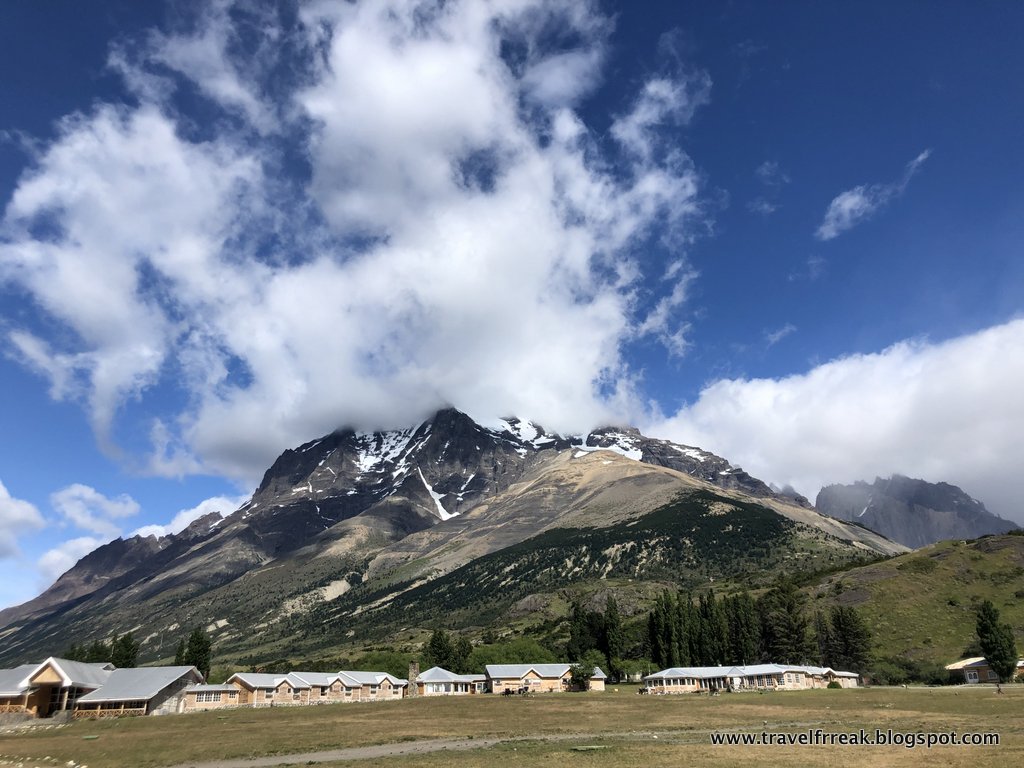
Landscapes in TDP
The whole national park of TDP is centred around the W trek which is extremely popular among tourists. There are three main valleys where people trek. The first is to the Base del Torres. Second is in Frances valley. And third is along Lago Grey. There are other trails too across the park though W remains the most popular one. All along the trails and in the park, there are huge lakes in brilliant green and blue hues, lined with very high snow covered peaks rising much higher than the small hills and Patagonian landscape around. These peaks have a very interesting history, of being formed of igneous and sedimentary rocks which give it its different colours. And all around, the views are magnificent.

View from Frances Valley
The park is very well maintained and convenient, with a comfortable setup for tourists to visit. There are shuttle buses within the park to make it easier for people to move from one place to another. Also there are loads of refuges at the base of most treks for people to stay. In addition, there are multiple ferries which run across the lakes to connect these places. The park is very popular with tourists and so the administration tries to control the number of people visiting it. They have hiked up the prices artificially higher within the park, with even the refuges with bunk beds charging $200 per night per person! But it hasn’t been able to discourage visitors, with thousands visiting every year still.

The W trek is quite strenuous, with up to 11 hours of trekking per day (all the times are based on 2 mph speed, which is quite do-able). Given not all of us were that fit, we researched and found that its possible to do only parts of the trek too if you want, as each day you would go up and come back to the same base location. So it was very easy to do only part of the trek if anyone was too tired. We did a slightly modified version of the W trek given we were not able to book accommodation at all the base camps (even though we had looked to book it all 7 months in advance!). So what you will read of below may not be exactly the same you find on other sites, but its definitely an easier option.


Day 4 - Trek to Base de Las Torres; stay at Refuge Torres Central

We got up early and left from Puerto Natales for TDP before the tourist buses got to the park entrance, to avoid the crowds. The drive was about two hours and through the usual Patagonian landscape. There were also loads of purple flowers on the sides which was true of most of the Chilean side of Patagonia. There were also loads of cows and guanacos grazing everywhere on the sides of the road. One guanaco even ran on the road and we had to avoid it.

The weather was not too bad that day but we could see dark angry clouds where the park was supposed to be. We also saw a couple of rainbows on the way which were pretty. Today was a very windy day though and we finally got to see what the famous Patagonia wind is all about. There was so much wind on the road, that we felt that our car will fly off!

We drove towards the Lago Amarga entrance to the park which is located right next to a small lake. There we paid the entrance fee and then drove to our first refuge at Torres Central. After checking-in we quickly started walking on the trek.

About the trek

Start of trek
The first day’s trek was about 23.5 kms one way, with a total ascent of 1300 metres though the net height gained during the day was only 750 metres. So there was quite a lot of up and down on the way. The walk was fun and had great and varied views all the way, though it did get a bit taxing by the end of the day. The weather was awesome that day, it was sunny for the most part, quite warm at times with very less wind and no rain throughout. I really enjoyed the trek today, which could also be because it was the first day and we weren’t as tired yet 😀.

Windy pass and spring below
There were almost multiple phases of landscapes on the trek. The first part was mostly about going up the mountain where we got panoramic views of the lake and vastlands beyond. We saw some very interesting shapes of the clouds in this area, some of them were shaped like UFOs. Then we crossed a windy pass area where we walked on the edge of the mountain for a bit. It was extremely windy there and we were followed all the way by a gurgling river in the valley. On the other side of this valley, we saw lot of sedimentary formations showing up as lava layers in the mountain. Once we got past this, we got to the first refuge on the trek which has a beautiful location next to the stream in the valley. You can even ride horses all the way up to here, to avoid walking. We filled water in our bottles from the streams multiple times on the way, which was much tastier than the water we were getting from the taps 😀.

Base de Las Torres
The last part of the trek goes through ups and downs till the next refuge and then you have a 1.5 hour trek walking through bare stones on the mountains. The views on this part of the trek were impressive, but this was also the toughest part of the trek. Once past this, you reach the end of the journey, where you can see the blue green lake at the base of the three mountain peaks - the 3 towers, Las Torres. It was a stunning view on the top and a good place to sit and enjoy the serenity there. Though it was extremely cold and windy on the top and after a quick photo and water break we left soon for the trail back.

Stream on the way
The walk back was a bit easier but still long. It felt great to have done the trek and it wasn’t as tough as I thought it would be initially. The good weather definitely helped. On the whole, there were lots of people on the trek but not that much that it feels like a crowd. There were some horse shit smell half the way though which smelled a bit. We also noticed that on the trek, the trees in the middle had very smooth barks, unlike the rest of it. As people who walked on the trek would touch the tree and pass it, making it much smoother. It was very interesting to see this all the way.

About the refuge Central Torres 

The Central Torres refuge was quite simple, with bunk beds in each rooms and some common areas to chill. The toilets were not the best or the cleanest though. There was no free wifi and there were no electric plugpoints in the refuge either. At $180 per person, it felt a bit overpriced given the facilities they had. But after seeing the next refuge, this felt definitely worth it 😆.

Food was included in the price, with dinner and breakfast served in the common cafeteria, and packed lunch provided for the trek. The food in the cafeteria was tasty and served well. There were also nice areas outside to chill and relax, with views of the mountains and lakes around, but given how tired we were after the trek, we did not use the facilities much. Once back from the trek, we would eat dinner in the first round and quickly get to bed as it would be an early morning again the next day.


Day 5 - Drive to Pudeto and ferry; trek to Frances Valley up to Mirador Britanico; stay at Refuge Paine Grande

Today we were trekking up the Frances valley (some of us including me part of the way, up to Mirador Brittanico) and we had to drive to another refuge to reduce the walking we had to do during the day. So after breakfast and taking our packed lunch from the refuge, we drove up to Pudeto and then took a catamaran across lake Pehoe to get to our refuge for the second night, Refuge Paine Grande.

Drive to Pudeto, with dried trees
The drive through the park was picturesque, with green rolling hills, guanacos and views of green and blue sparkling lakes next to the high peaks. The road was quite bumpy though. We drove through many places with lot of dried out trees next to the lakes. But never understood if they were dried or just seasonal trees. We parked our car at Pudeto and took the catamaran from there.

View from the catamaran
We passed by loads of very small islands all along the huge Lake Pehoe. We stood on the top of the catamaran for a bit and got fascinating views of the main peaks of the park and the valleys which make up the W trek. Though it was extremely windy on the catamaran, with water from the lake splashing on the people standing on top. And we could not stay on top as much as we wanted to.

About the trek

Lake Pehoe and UFO clouds
Once we got out at the refuge which is located right next to the lake, we left our luggage there and started on the long trek of the day. The trek for the day was about 11 hours but I decided to go only till the first lookout point at Mirador Brittanico. So I covered about 22kms of the trek, in about 8 hours, with a total ascent of 900 metres. The start of the trek has panoramic view of the Lake Pehoe behind, which looked green in the sunlight.

Wind picking up water on the lake
Then we passed along lake Skottsburg which looked dark blue in the light, lined with dried out trees all along it. It also had water blowing along it when the winds were too high and we were able to capture a few photos of it! At times there was so much wind on the trail that it was tough to stand still at one place. After this lake, we crossed a few smaller lakes on the way. The path was mostly narrow on this trail and there were less tourists than the previous day. Also there were lot of small irritating insects on the path. We also crossed a few wooden bridges on the streams most of which had a maximum limit of 1-2 person at a time!

Glacier view from the viewpoint
We then got to the Italiano lodge in about 2.5 hours (7.5 kms) after which you start climbing steeply along one of the peaks. Then you can get views of the Frances glacier and the fast flowing river on the bottom. At the Brittanico viewpoint on the top, we got majestic views of the glacier on one side, dramatic mountains on another side and a faraway view of Lake Pehoe behind. The lake looked even greener from this far. The viewpoint felt like a bowl and clouds were coming into it soon. It got very very cold and windy at the top by this time and even started raining. So we again had to hurry back quickly.

Peaks from the viewpoint
View of Lake Pehoe from the viewpoint


The trail
The trek back felt very long and difficult, as it was extremely windy and we ran into quite a bit of rain while coming down, all the way till the Italiano camp. After that it got a lot sunnier and brighter though. Overall today’s trail was more narrow and rocky most of the way. There were also less tourists than the previous one. And I found the views less impressive too. My favourite was still the first day to Base de Las Torres.

About the Refuge Paine Grande

The refuge was located right next to Lake Pehoe with breathtaking views right outside. We got bunk beds, and the rooms were clean. The price included breakfast, packed lunch and dinner. The cafeteria and food was fine but nothing great to write home about. There were nice places to sit outside in the sun. And the common areas comfortable to hang around. with a fire burning every evening. There was a lot of wind at night which disturbed our sleep at night with the windows making a lot of noise but I guess that is to be expected given its Patagonia! As expected there was no free wifi and you had to pay for it.

The toilets in the refuge though were definitely below par. And they did not have towels or bathing soaps in the toilets either. Though all this wasn’t the worst of it all. The service at the refuge was even worse than the toilets. None of the receptionists or the cafeteria workers smiled, even while answering questions. They were almost rude a lot of times and it wasn’t a great experience. And I definitely think this refuge was very overpriced at $150 per person. So not a great experience at all.


Day 6 - Trek to Glacier Grey; ferry to Hotel Lago Grey

About the trek

Lago Grey
Our day started much later today than other days as we started trekking only around 9 am. It was about a 4 hour trek up to Refugio Grey, for about 11 kms till where you can get a view of the Grey glacier. And then we were taking a ferry back to our hotel across Lago Grey. The trek today was the easiest of all the days, with a total ascent of only about 450 metres over the 4 hours. It almost felt like child’s play after the last few days 😜.

Icebergs on the lake
The trail from the refuge first goes towards Lago Patos and then you reach Lago Grey. This is a huge lake extending for more than 15 kms and most of the trek now is along the lake. There are load of viewpoints along the trail which give panoramic views of the lake from different vantage points. The lake had snow covered peaks on the other side. And loads of deep blue icebergs floating on it, coming from the Gracier Gray which feeds the water in this lake.

Glacier from a nearby bridge
Again the trail today was quite narrow and there were not many people around. On the sides was the usual stream and river flowing plus a few patches on the way were covered with flowers. The day was cloudy for most part of the trek, though it was warm and windy alternately. There were also loads of flies everywhere which were a bit irritating as they kept sticking to the jacket!

Dead ice from the glacier
Once we reached Refuge Gray near the end, we walked to a nearby viewpoint where you can get a nice view of the Glacier. And can see loads of dead ice floating on the side. The glacier was huge and you could see it till far when the weather was better. But the edge wasn’t as high as the Perito Moreno we had seen earlier. Some of my group also trekked to two bridges ahead of the refuge which gave even closer views of the glacier, though I didn’t make it till there.

Glacier from the boat
We then took the 2 pm ferry from the refuge. It lands at the beach near the Bigfoot camping ground and it was an effort getting there as the weather had turned and the winds got very strong and heavy by then. The ferry then took us closer to the glacier but it had got very rainy by that time. So it wasn’t as fun to stand outside and enjoy the glacier views. The glacier is actually split into three because of 3 small islands on the lake. And the icebergs there were very pretty there.

Huge icebergs on the way
The boat ride was about 2 hours total and it dropped us on a black pebble beach from where we walked to our Hotel Lago Gray. We first stopped at the cafetaria to get hot food given how much we had been out in the windy and rainy weather. And then we walked 1 km more to get to our hotel, the Lago Grey.

About Hotel Lago Grey

View from the restaurant
The hotel felt like paradise to us after the two refuges we had stayed in the last two nights. It was almost like a luxury hotel where people who did not want to trek but still enjoy a relaxed experience would come and stay in. It also costed about $200 per night but at least it was better value for money than the refuges we stayed in! The rooms were huge, all with views of the lake and the glacier behind. There was free wifi and we almost felt like we had come back to civilisation after days of being in the wilderness (i.e. no data 😜).

The rooms had a nice decor, individual bathrooms, heating and everything else that a normal hotel has 😆. The dining area also had great views of the glacier and we had a nice evening getting back in touch with the world outside while enjoying views of the glacier till late. It was still windy and rainy that day though, so we couldn’t go out much.


Day 7 - Drive around TDP; stay at Aqua Terra hotel

We had a late breakfast today as we were just happy about finally being back in civilisation, and with no need to wake up very early. We enjoyed the view outside of the glacier from the window and then spent most of the day driving around the park. We first drove next to Paine lake and river which looked absolutely stunning in the sun - blue green in colour with the snow covered peaks in front.

Views of TDP
I spent some time next to the lake, around Camp Pehoe. I walked down to the lake and sat there for some time on the rocks, finding a less windy place to be. There were a few interesting birds to watch there too. Then we drove to Salto Grande waterfall where the water flows from the higher lake Nordenskjol to the Paine lake. We walked up to the viewpoint and it was crazy windy there.

Salto Grande waterfall
Views of TDP


Lake Toro on the way
And then we started driving back to Puerto Natales. We drove a long time next to Lake Toro which was outside the park and quite mesmerising. It appeared green and had huge bare peaks on the other side. On the way we ran into patches of rain and then sunny times all the way back. The roads were mostly ok though some patches had gravel. We also noticed a small airport on the way, so it looks like there is a way of reaching here by plane too, though it might be through a chartered flight only.

About the Hotel Aqua Terra

Once In Puerto Natales we checked in to a small hotel, the Aqua Terra. The hotel was a boutique hotel and quiet cute. We tried looking for laundry around but as it was christmas, none of the places were open that day. Thankfully the hotel offered to do it for us! We had a quick dinner at the Pizzeria La Guanaca which offered great food and was nearby. And didn't really explore the town today.


Day 8 - Bus to Punta Arenas; stay at Hotel Great Western Finis Terrace

It was Christmas today and it looked like the whole city was shut. There were no people on the road and the cabs also charged double the fare. Even at the bus station, there was only one bus company plying buses. We booked a bus to Punta Arenas and were on a 3 hour ride though the typical Patagonian landscape. And very quickly we were in Punta Arenas.

Punta Arenas
The town of Punta Arenas seemed like an industrial place while coming in. But then we saw some very pretty and huge buildings closer to the city centre. It actually felt like the prettiest of all the towns we had been to till now, El Calafate and Puerto Natales. We walked around a bit to get to a restaurant open on Christmas day but there were very few options. We finally had lunch at a gastro pub called Fusiones which had quite bad food and service.

While walking around, a friend of mine also ran into a Hindu temple and a square with Tagore, Gandhi and Mother Teresa’s statue! In the middle of a small town in Chile! That was really something. There wasn’t much to do around here though today. There were trips to a Penguin Island nearby but given it was christmas, they were not running tours today. And so we had another quiet evening.

About the Hotel Great Western

We spent most of the day relaxing in the hotel itself, at the Great Western Finis Terrace. It was 2 mins walking from the bus stop. The top floor of the hotel had a fancy restaurant which had a nice view of the town, with its small houses, colourful roofs, church spires and sea on one side and the hills on another. The view seemed quite charming in the morning especially with the sun rising in the background.


Day 9 - Bus to Ushuaia; stay at Hotel Canal Beagle

Today was a very simple day for us. We had a 12 hour bus ride all the way from Punta Arenas in Chile to Ushuaia, the southernmost town on the continent, in Argentina. We took one of the Bus Sur buses which we have booked beforehand and were in the bus from 8-8.

Lighthouse at the edge of the mainland
The drive was the typical Patagonia drive, with grasslands on both sides, fences, and sheep and cows. On this drive, we also saw some ostriches in the farms. And as we drove from the mainland to the island of Tierra del Fuego, a lot of the drive was next to the sea. To get to the island, we had to get onto a huge ferry along with the bus and were lucky to spot some dolphins jumping on the sides of the ferry.

Typical flowers on the drive
The island had a lot more gravel road and was less developed. Again we had to go through Chile and Argentina visa check at the San Sebastien checkpoint. And keep driving forever…. The last one hour of the drive was through mountains and had lakes, so that was a change in scenery, and felt a bit more interesting. The whole journey was a bit tiring though.

Ushuaia is almost at the edge of the South American continent and is the southernmost city in the world. It is the location from which ships leave for Antarctica tours and hence important on the tourist map. It is a huge place surrounded by snow covered mountains and the sea coming in through a channel.

We walked a bit along the high street and the waterfront as we really need to unfreeze our legs after the long bus journey. Both places felt quite lively and touristy. The high street had loads of designer shops which felt surprising. I am guessing a lot of the cruises here bring in rich tourists who like to shop. And the waterfront had great views of the mountains, the docked boats and cruise ships. There was a cool breeze following and the walk felt very refreshing.

About the Hotel Canal Beagle

Our hotel, the Canal Beagle where we were staying for two nights (after a long time) was located very centrally and quite convenient. It was quite average and nothing much to write home about. We went to Maria Lola for dinner and it was quite a fine dining place though with tasty sea food.

Argentinian cities of Ushuaia and Buenos Aires (3)


Thursday, March 7, 2019

Exploring Argentinian Patagonia around El Calafate (1)


In Dec 2018, I spent about 2 weeks in Argentina and Chile, mostly around the Patagonian region. We trekked around El Calafate and did the W trek in the national park of Torres Del Paine. And then spent a few days in the southernmost city of Ushuaia and four sun-filled relaxed days in the Paris of South America, Buenos Aires. I had to cut short my trip a bit, and my friends also trekked in El Chalten and visited the famous waterfall of Iguazu in the same 2 week trip.

Given how huge the countries are, we ended up taking multiple flights and buses to get from one place to another and spent 2.5 days of our trip mostly travelling across the country. So even though two weeks feels like a long time, even in this long period, we could only explore the south western part of Argentina.

Patagonian landscape
We had an awesome trip and I must say, Patagonia is stunningly picturesque. The views we saw became so commonplace to us that after a point we stopped valuing it when we there. But when we came back, we missed the whole experience for a long time. And Buenos Aires was an absolute delight to explore and experience. So all in all, this trip is a definite recommend from me.


Plan and itinerary

We were visiting both Argentina and Chile (and also Brazil for Iguazu) on this trip. So I had to go and get both visas in London beforehand, which was quite an experience. For Argentina, you could book a visa appointment only by email (in today’s day and age!!). Though the actual process to get the visa was quite simple and easy afterwards, with no charge for Indian citizens. So I had no complaints. For Chile, you had to apply online and then go in person carrying the same documents! Also the embassy did not inform you once your visa was approved and I had to go in person to check whether I could come in for the in-person meeting with the document. The whole online submission almost felt like a waste after that. So be prepared for the slightly funny visa processes if you are planning to go there.

As it was a long trip, we had a very detailed itinerary planned. And we had to make a lot of bookings beforehand to make it work seamlessly. And it did. Below is the itinerary I followed:

Day 0 - 1: Flight from London to Buenos Aires; connecting flight to El Calafate (evening); stay at Hostel Schilling
Day 2: Day trip to Perito Moreno glacier in El Calafate; stay at Boutique Hotel Cantera
Day 3: Bus from El Calafate to Puerto Natales (6 hours); stay at Hotel Natalino
Day 4-7: 4 days W trek / TDP sightseeing
--- Day 4: Drive rental car to Refuge Centro Torres; trek to Base de Las Torres and back; stay overnight at Refuge Centro Torres
--- Day 5: Drive to Pudeto; 9 am catamaran to Paine Grande; trek in Frances Valley to Mirador Britanico and back; stay overnight in Refuge Paine Grande
--- Day 6: Trek up to Glacier Grey; ferry to Hotel Lago Grey; stay overnight at Hotel Lago Grey
--- Day 7: Drive around TDP to explore other spots and return to Puerto Natales; stay at Hotel Aqua Terra
Day 8: Bus transfer from Puerto Natales to Punta Arenas (3 hours); stay at Hotel Great Western Finis Terrace
Day 9: Bus from Punta Arenas to Ushuaia (12 hours); stay at Hotel Canal Beagle
Day 8: Bus transfer from Puerto Natales to Punta Arenas (3 hours); stay at Hotel Great Western Finis Terrace
Day 9: Bus from Punta Arenas to Ushuaia (12 hours); stay at Hotel Canal Beagle
Day 10-11: 2 days in Ushuaia; visit to Penguin Island; trek to lake Esmeralda; stay at Hotel Canal Beagle; flight to Buenos Aires (late night)
Day 12-15: Buenos Aires; flight to London (afternoon); stay at Hotel Park Tower

Puerto Natales
My friends after Day 2 had added 3 days of trekking in El Chalten, which is a must do. And they also spent days 12-13 visiting Iguazu falls. So you can easily add these two places to the itinerary. We spent the right amount of time in all places, so there are not many changes I would do to the plan. But, in hindsight I would say that Ushuaia is missable, and you can probably visit Atacama desert instead.

As this trip was very long and we had lot of free time in between, I started writing the first draft of the blog on the trip itself. So it will be quite detailed. Hopefully it is still as fun to read...


Day 0 - 1: Flight from London to Buenos Aires; connecting flight to El Calafate (evening); stay at Hostel Schilling

First view of Buenos Aires
The flight from London to Buenos Aires was very long, more than 14 hours! Thankfully it was a night flight and I slept through most of it. While landing in BA in the morning, I got a first peek of the city. All around the city, there were fields and small houses. And then came all the high rises right next to the sea. The skies were clear and sunny, it already felt amazing given I was flying out from London in December. It felt like heaven to be back in the sun, almost like being home in India. And I was already looking forward to the vacation.

I was taking a connecting Aerolineas Argentinas flight to El Calafate from the local Aeroparque airport which was about an hour or so away from the international airport. I had some 3 hours between the flights and had to get out of the airport soon. But it turned out that the international airport had some immigration problems and we were made to stand in a very very long queue. I asked 3 of the officials to help me as I had a connecting flight with limited buffer time but they just told me they couldn’t help me and I had to follow the rules. So I just walked in front to the VIP line and sailed through the immigration line quickly 😜.

I then took an Uber to the other airport (which turns out is still illegal in Argentina!). So I had to take the cab from slightly outside the airport building, from the parking lot and had to sit in the front seat. I realised soon that not everyone spoke English here (the Uber driver didn’t) and even the billboards were all in Spanish. It was too late a reminder to me to brush up on the little Spanish I knew.

The drive to the other airport even though through the city, passed through many open and green areas. The roads were amazing and my first impression of Argentina was of a developed country. There was something very attractive about the city, something that was calling out to me. I don’t know what it was but I knew I would love it when I was back there at the end of my trip. I also wondered why India can’t be at least a developed country like Argentina?

The local airport was near the main city, and quite cosy and convenient. It was located right next to the sea on one side, and with a huge park and high-rises on the other side. Even though everyone had said I would easily reach the airport, I still hurried and so made it before time. After check-in, I therefore decided to have my first Argentinian meal - Hard Rock Cafe fajitas in the airport 😁.

Views from the top
The flight to El Calafate was a day flight flying across Argentina. It mostly flew along the East coast of the country and I could see some of the water bodies going inland. We mostly flew over empty green areas and it looked like an agricultural place. And then came waste wastelands lined on one side with huge lakes and snow covered mountains. This was Patagonia, the vast land extending till forever, with limited shrub vegetation.

Views from the top
And then a huge sparkling blue lake came into view, surrounded by snow covered peaks on the other side! I was so amazed by the colours, I was totally mesmerised while in the flight itself. I had a dirty window, else would have got amazing shots of the view. When we landed at El Calafate, it was on a runway right next to another huge blue lake, again lined with snow capped mountains. It felt like I had come to a magical place, far far away...

Lake next to the plane
I took a shuttle from the airport for $7 which dropped all the tourists to their respective hotels. It drove us all along the sparkling blue lake, through the Patagonian shrub-like vegetation all through to El Calafate. And I again knew, I would like this place. Just coming out of the airport into the fresh air, with the smell of the lake and mountains nearby had felt exhilarating by itself. And now with such magnificent views, it was enough for me to fall in love with El Calafate. Oh how much I love and miss nature!

My hostel, Hostel Schilling was quite cosy and convenient, located near the main street. My room got upgraded, so I liked it even more 😁. The owner was very helpful and helped me book my glacier tours for the next day. As it was summer and the sun set only at 11pm, I had a few hours before nightfall. It was also a very warm and sunny day, with temperature in the 20s which rarely happens in this area. So it was perfect to go out for walk and explore the town. And the owner of the hostel told me the best places to go to, to get a good taste of the town.

El Calafate is a very small little place, located on Lake Argentino and popular as the entry town to Patagonia. It has an airport and most tourists fly here to visit some of the nearby glacier parks as well as other Patagonian sights. The town of El Calafate was very small, tourist friendly, convenient and charming. It is quite spread out, with buildings all along a couple of small hills overlooking the lake. And there were some high bare cliffs overlooking the town.

Views of El Calafate
The buildings in the town were all quite small and had tin sheet roofs. Most of the streets were lined with trees with lot of green areas everywhere. The houses could have been in any American town but the setting was unique. The town felt very so charming and cute, with its bare modernity right in the middle of nowhere. When I was there, it was a sunny and warm day, with a deep blue sky studded with clouds, and the sun shining bright - whatay sight it was! And just being there reminded me of my childhood time spent in Kashmir with its small villages, fresh lakes, high peaks and chilly summer weather.

I first found an ATM to take out cash which didn’t charge an atrocious amount just to take out cash 😆. Then I walked towards the lake which was a 20-30 mins walk from my hostel and it was a fabulous path. As I got out of town, I got some fabulous views of the town behind and the bright blue waters of the lake in the front. There were lot of grasslands next to the lake and lot of cows and horses lazing around there.

Views of the lake from the walk
The whole view at sunset was even more picturesque and it was very easy to lose yourself while walking amid nature. And when I got close to the lake, I saw some flamingos standing in the waters of the reserve. I had already fallen in love with Patagonia by then. It felt so fresh, and nice to come back to nature. With its blue skies, the fresh air, greenery around and a feeling of being far away from all of life’s troubles!!

Main street at El Calafate
After spending some time taking in the lake views, I walked through the EL Calafate main street which was lined with shops selling handicrafts and tons of small eating places. It felt quite lively with all the tourists and tons of cars zipping around. I had dinner at an Italian place called San Pedro which had an interesting take on a pizza - with very thick vegetarian toppings! Apparently Argentina is full of Italian migrants and this was an Argentinian version of the pizza developed by the locals. The sun set around 11 pm at this time of the year, so I still had lot of time to explore around. But since I was jet lagged, I called it an early night even though it felt like I wasted valuable vacation time and slept too early 😜.


Day 2: Day trip to Perito Moreno glacier in El Calafate; stay at Boutique Hotel Cantera

Today I was visiting the Perito Moreno glacier which is quite close to El Calafate and the most famous attraction nearby. It is located inside the National Glacier park and you can tour it in multiple way, most of which involve going through a travel agent. You can take a walking tour which takes you on the glacier, or take a boat ride on the lake which stops at multiple glaciers on the way, take a kayak to the glacier and so on.

I chose to take the guided bus tour which takes you to the park and then you can take a boat to very close to the glacier. Taking sunglasses and sunscreen with you was most important for this part of the trip. The day turned out to be warm, bright and sunny, and it enhanced my entire tour unlike my friends who had visited it a few days earlier when it was chilly and windy. Though I still dressed up too warm for the day. And realised later why it was so much more important in these parts of the world to dress up in layers, to be ready for 22 degrees or rain or chilly 5 degree weather!

Patagonian landscape
It was a one hour drive to cover the 80 km distance to the Perito Moreno glacier. We had a guide on the bus who was quite chatty, so I learnt a lot about Patagonia while on the drive. She and the driver kept us entertained all through and it was fascinating to hear them share anecdotes about the country and region. Unlike what I thought earlier, Patagonia is the name for the whole southern part of South America (Chile and Argentina) which covers both the Andes mountains as well as the flat shrub lands. The flatlands are vast and extend all the way from the Andes to the coast, while the Andes separates Argentina and Chile, with a little bit of coastal land on the Chile side. The flatlands are boring and have the same view for 100s of miles. It is all covered in small shrubs (with some flowers at times) and the landscape doesn't change much.

Driving through Patagonia
And surprisingly, all this land is owned by huge rich farmers. And so you will notice that all this bare shrub land is fenced, everywhere. And after few miles, whenever you see a group of trees, it generally means that the farmhouse is located right within the trees, with the trees breaking the wind and providing protection to the house. This whole region was owned by the natives earlier. And then the government starting giving incentives to the new immigrants to go and settle in Patagonia. Whoever went there and farmed the land could become the owner of the land in 13 years. So 1000s of people migrated from similar hardy cold countries like England and Norway to Patagonia, farmed for a few years and soon became owners of all this land.

They built these huge fenced farms and made this region their home. They started with rearing sheep, cows and horses on these farms. However, the sheep caused land erosion with their feet which were not suited to the vegetation and soil of the region, and soon Patagonia turned into a desert, reducing its ability to support large numbers of farm animals. And now the income from sheep rearing has dropped a lot in this region.

The weather in Patagonia in winter is harsh. It gets very cold and everyone has to deal with a metre of snow most of winter. Even in summer, it is generally cool-ish and windy all the time. The weather is generally said to be very variable even within a day, changing from being cloudy and very windy (its a part of their lives) to raining suddenly to become sunny and warm within no time. Of course when I was visiting, it was a warm, bright and sunny day at 22 degrees and was not a typical Patagonian day (something the guide reminded us at least 10 times during the day).

Patagonia was totally covered with ice 1000s of years ago, which created a lot of the features that we see today. Now, the whole region has more than 200 glaciers one of which was the Perito Moreno. It was part of the Patagonian ice fields which go on for 100s of kms. It is the water from all these glaciers that melts into the Argentino lake next to El Calafate. The lake is about 65 kms long and it has a milky white colour because of all the sediments that flow into it from the melting waters from the glaciers.

We got to see loads of fascinating views along the drive to the glacier. While leaving El Calafate, we passed by some wetlands next to Lago Argentino and they were full of birds, including flamingos, swans, geese etc. During summer, the wetlands are flooded with water, but right now it was dry and full of horses, cows and migratory birds grazing there. There were loads of pink flamingos here who migrate here every year from as far as the Atacama desert and Bolivia. Apparently, It was still the nesting period for them back home but the singles or the too old ones were the ones who come here this time of the year 😆.

Beautiful landscape on the way
Once out of El Calafate, we drove next to Lago Argentino for some time. We could see the snow covered Andes across the blue lake on one side and bare small mountains on the other side. Then we drove through the typical Patagonian flatlands with small bushes on both sides. Along the drive we saw an eagle and a few caranchos. Other than that, they have some major wildlife like puma, skunk, llama (guanaco) and armadillos in the mountains though we did not see any of that. The drive was quite picturesque and every turn here felt like a photo opportunity. We even stopped at one location to take photos of the lake and the mountains, and it was breathtaking! The guide then showed us a few local plants like the calafate berries and their uses. She also showed us the matte tea which is drunk all day by the locals.

After the informative drive, we then entered the park, known as Parque Nacional de Glaciares. The entry fee to the park is 700 pesos. Once inside, we could see more Andean forest vegetation all around unlike the Patagonian shrub land we had left behind. The park has many glaciers, though we were only visiting Perito Moreno on the tour.

View of Perito from far
Perito Morena is one of the most easily accessible of the glaciers in this region (by car, boat and bike!) and hence one of the most famous ones. It is huge though not the biggest around here, with an area of 250 square km, even more than the city of Buenos Aires! The height of the face we see was 70 feet above water and 220 below, though it did not feel like that. It moves 2 meters every day but is currently in equilibrium and it stays the same for years.

The glacier sometimes splits the lake into two, and when more water fills in the lake, it goes over the glacier and the two parts of the lakes meet again. It has happened a few times in the last 100 years or so. There are two sides to the glacier, the north and the south side. The north one is less high and you can see it from the trail on the mountain just opposite. And you can see the south side from the boat.

Perito Moreno from the trail
We first got a view of the glacier at a viewpoint from very far. And then we drove closer to the mountain across it where there are a few trails you can walk on to get a closer look at the glacier from different angles. I walked along the trail for a bit and enjoyed getting up close to the glacier. The ice at places looked quite blue. And you can see loads of peaks on top of the glacier. It is much bigger than what it feels though. And looking at the edge of the glacier, also made me realise how the wall in Game of Thrones would have felt like!

Icebergs in the lake
Quite often, you can also hear a thunder like sound which comes from carving - when some of the ice breaks away from the glacier and falls into the water making a loud sound, as the ice dissipates in the water, even creating icebergs on the way. I saw two such big falls and the whole experience felt surreal. It is almost like the Game of Thrones wall falling apart, and can be very scary if you are up close. Sometimes, you don’t even see the ice breaking but can only hear the sound it makes. It is from all this carving itself that small icebergs are created in the lake, and we saw a few of them floating around.

North edge of the glacier
The views of the glacier were quite fascinating and you can easily spend 3-4 hours walking along the viewpoints to explore and appreciate the glacier. There is also a cafe there where you can have lunch. After the walk, I took a ferry ride which costs 800 pesos and takes you up close to the glacier. Before getting onto the ferry, I filled my bottle with water to drink from a stream coming into the lake. Even though the weather that day was hot, the water in the lake was very cold and apparently it is about 4-5 degrees all year round.

Glacier from the boat
The boat ride was about 45 mins and takes you to up to 300m from glacier. From the boat, you can see more ice carving, though its good to be a bit far away from it. You can also see the structures of the glacier as well as the deep blue inside more up close. It also got materially colder and windier when we were in the lake on the boat.

Once we finished the boat ride, the bus picked us up and dropped us back at our hotel by 5pm. There is also a museum on glaciers on the way, called the glacirium which some people visited. It had been an amazing day for me and I loved the visit to the glacier. The brilliant weather had also helped as everyone said, its never so warm in Patagonia.

Once back in town, I shifted to my second hotel in the evening, the La Cantera which was on top of a hill. They had a lake view from there which was awesome. And a few birds wandering around in their premise. It was definitely a more high end hotel than my hostel of the previous day. They even sent a shuttle to pick you up from your restaurant if you go to the city centre for dinner. We had dinner at Pura Vida which was one of the few vegetarian friendly restaurants in the city, and as usual called in an early night, much before the sun set.


Day 3: Bus from El Calafate to Puerto Natales (6 hours); stay at Hotel Natalino

Most of the days we were in Patagonia, we woke up every morning to the sound of birds chirping outside our windows. And this day was no different. And then the faraway morning views of the lake from the room window was very refreshing to wake up to. The day today was mostly spent in bus travel from El Calafate to Puerto Natales in Chile (from where we would have gone onward to the park of Torres Del Paine).

We had looked at renting a car but it was proving to be a nightmare given it was an international rental, and so we were taking a local bus. The bus station was almost outside town and had buses running to a lot of locations. The whole bus network felt quite well developed and convenient. We had bought our bus tickets only 2 days before and easily got seats. Our bus was also very convenient, with double-decker space, reclining seats and footrests for the long journey.

Purple flowers on the way
The drive to Puerto Natales was about 8 hours in total with two hours spent in crossing the Argentina-Chile border. The roads were great and the bus drove very smoothly. In fact, I thought the bus was driving at 40 kmph while it was at 90 kmph! The landscape on the drive was the typical boring Patagonian landscape of bushes, fences, houses with trees around them, some sheep and some small streams here and there. On the way, there were a lot of these typical flowers though (mostly purple on this segment) on both sides. The weather was awesome the whole way, very sunny and warm. It was a longish and boring journey though and I slept through most of it, getting ready for the loads of trekking that was going to come our way soon.

Crossing into Chile
On the drive, we had to go through the Argentinian immigration checkpoint first at Villa Dorotea and then the Chilean one where we even got our luggage checked. Then we went up and down the Andes mountains, and after crossing to the Chilean side, the landscape changed dramatically. There was more greenery, loads more flowers and many horses on this side of the mountains. And the Andes felt very narrow at this point.

Once in Chile, we quickly reached the town of Puerto Natales. We checked in at the Natalino hotel which was a very small boutique hotel and quite comfortable. It had a small pool on the top floor with an impressive to view of the town, of the roofs and sea and the mountains beyond.

Puerto Natales is located close to the coast with the mountains visible from most of the city. The town is not on the ocean itself, but has lot of backwaters coming in right next to it. My first impression of the town was not very positive. It was bigger than El Calafate, and more spread out but was not as pretty or charming. It had 1-2 floor buildings all spread out.

In fact it felt very industrial in certain areas and doesn’t have much to offer other than being the entry point to Torres Del Paine. Its location though is pretty, right next to the water and mountains, and if it was in Europe, I am sure it would have been beautified and looked prettier. We walked to a few of the central streets and they were all full of shops and travel agents for tourists, all lined with trees. Even though there wasn’t much to see, it still felt nice to walk around in the sun.

Along the waterfront
We had lunch at an awesome restaurant called Cafe Kaiken. It had one of the best service I have seen in a small restaurant and the food was tasty. After lunch, I shopped for some clothes from town, just like that! And then we all walked along the waterfront but it wasn’t much to write home about. We visited a local supermarket to stock up on food for the trekking ahead, and it felt very normal.

Xmas celebrations in Puerto Natales
As in Argentina, Chile felt quite cheap, for taxis and food but most places only took cash which was a bit of a problem. We again withdrew some cash and paid the 5% charge on cash withdrawals (same as in Argentina). We passed by a few churches when going back to our hotel. And given it was soon to be Christmas time, we also passed by a local trailer which was showcasing the birth of Jesus, with children playing the roles.

As with most of our trip, we had 3 tough days of trekking ahead, so we again called it an early night. Which was tough as always as the sun didn’t set till 10 pm! And it was tough to call it a day and sleep so soon.

Patagonia around TDP (2)
Argentinian cities of Ushuaia and Buenos Aires (3)


Thursday, February 21, 2019

Diwali in India and visit to Sangam at Allahabad


Diwali in Delhi

Diwali at home
Last year, after many years (8 years actually!) I got to celebrate Diwali at home in India. And even though all these years, I have been celebrating Diwali abroad, being at home made me realise that what we were doing wasn't really the real thing. So many years of being away had blurred our memories and we thought it was enough to have dinner, games and fireworks on the Diwali weekend with friends. And that's all there was to Diwali 😊.

So on my trip back home this time, we went the whole way, celebrating Diwali as it is supposed to be celebrated. We decorated our home with flowers and lights all over, from top to bottom. And made a few rangoli around. I also made my first one ever with colours and realised that even the easier looking ones take so much effort to make.

We ended up going to the bazaar almost everyday and I realised how there was a flurry of activity all the time everywhere. It was all so lively everywhere we went, all lighted up, flowers everywhere, small stalls outside the markets selling sweets, rangoli colours, decorations and so on. And mehendi artists sitting everywhere. I even got mehendi done this time. There were sadly no fireworks this time though because of the court ban, which was quite sad.

Random haveli
We even went to Chandni Chowk one of the days for some shopping and I was impressed. Chandni Chowk is a world by itself, with its narrow gullys, its unlimited shops, its hidden gems and old havelis that you come across in the middle of nowhere and its feel of being from a different century altogether. I loved the feeling of being there, soaking in all the sights and experiences. I did feel like a tourist in my own country, taking photos as I walked along. But it is what it is.

Gullys of Chandni Chowk


Diwali wares being sold
But on top of the usual Chandni Chowk feel, the whole area was full of Diwali roadside stalls coming up everywhere, selling colourful statues and decorations for Diwali. And we also ran into one of the streets which was decorated so beautifully with flowers, apparently it is a thing to come and see. We also spotted some hijras coming and taking donations from the shop keepers, even doing a small performance for them. It was quite an interesting experience and I loved being there.

Decorations being sold
Decorated street in Chandni Chowk


Around Diwali time, everything was decorated everywhere and all lighted up. Malls and shops were full of gift offers and discounts to encourage shoppers. Houses you drove past were all twinkling with lights. Everyone was our shopping for gifts and new things for the house. Friends and family came visiting and it was nice to meet everyone. It felt like the whole of the country was lively suddenly. Its how christmas time is in the West. And something I had missed around Diwali time for so long.

Rangoli
On Diwali day, we did an elaborate pooja which is much more than what we do in London. And then burnt a few of the fireworks we had manage to source. Till a day before Diwali, there weren't many fireworks going off and it it did not even feel that Diwali was approaching. On the day though, it looked like lot of people broke the ban and celebrated the festival how they are used to celebrating. And till very late. The next morning though, the roads were all empty for a long time as everyone woke up late. The whole experience of being back and experiencing the real Diwali felt almost surreal and amazing. And I decided that I should try to get back home for it as much as possible.


Visit to Allahabad and Sangam

Last year, I also got a chance to visit Allahabad and take a dip in the holy Sangam. My parents have stayed in Allahabad before and I have been to Sangam countless times. But there is something still very calming and inviting about visiting the Jamuna and Ganga again and again. It never gets old.

We went to Allahabad by train and I was travelling in Indian trains after 5 years. I was quite surprised to see that the train station at New Delhi hasn't changed at all since then. It is the same, and nothing has improved since then. Being in a train station always had an excitement linked to it for me. As the visit to the station meant we were moving or travelling to another part of the country. And were ready for adventure. And this time too, I felt the same excitement all over again.

The city of Allahabad hasnt changed at all in the 10 years since my parents moved away from there. Even the name which had been recently changed to Prayagraj hadn't taken roots yet 😁. The air was definitely cleaner and fresher given we were coming from Delhi. But otherwise, it felt the same - the same run down buildings, the same busy bazaars, the same crowded roads the same slow pace of life and so on.

There are many pretty buildings in the city from British times - the high court, a few churches and some colleges. Some of them are maintained but a lot are not. And other than these places, the city doesn't feel pretty at all. I wonder so many times how will my country ever reach the Western standards if the cities are not constantly improving?

A church on the way
And the people felt the same to me too. Its a bit of stereotype, but the image is that people in UP always talked too much and argued too much. And were quite lazy overall. And we saw the same on this trip too. The auto guys kept arguing for no reason, ours did because we did not know the way to where we were going. I was actually laughing by the amount he complained because of that 😆.

We first spent some time in the Cantt area which is always pleasing and the best part of any town for me. With its green open roads lined with trees, huge British bungalows and huge gardens around them, plus cleanliness everywhere - its where I come and catch a breath, whether its in Allahabad or Delhi.

The bungalows in Allahabad Cantt have a very interesting history. These were built by the British but before they left India, they leased a lot of them for 99 years at minimum rent to civilians, right in the middle of the Army areas. The Army owned bungalows are well maintained but the ones owned by civilians lie in dilapidated conditions given the amount of resources required to repair and maintain them. Also there are restrictions on what you can and cannot do to these bungalows. But the ones which are maintained look so charming, I wish I had a few photos of them with me to share.

Boats to go to Sangam
After that, we went to visit Sangam. We took the e-rickshaws which have become the common mode of transport now. The road to Sangam is lined with some pretty buildings from the past, huge colleges set in sprawling lawns which if maintained would look very picturesque. But all of them are rundown now. Also most of the roads on the way were being constructed and there was a lot of dust in the air.

Akbar fort
At Sangam, we first took a boat ride for a couple of hours. The Jamuna always has more water than the Ganga and hence its easy to row a boat here. So the boatmen take you on the Jamuna for a bit till the bridge to Naini, along Akbar's fort. The fort is very imposing and provides many mesmerising shots all along the river.

Sunset and the bridge on Jamuna
There were a few seagulls flying above but mostly, it was very quiet there the whole time with only a few boats on the water. The whole area felt so serene and almost spiritual, I could have stayed there for a long time. With the boat slowly gliding on the water, and all you have around is a vast river with a lot of history and stories about it. It was lovely. We experienced a very serene sunset from the boat, and the silence around it was perfect to enjoy such a fascinating scene.

Boats on Sangam
And then we went to the Sangam which was more crowded than Jamuna. It is said that Jamuna is the elder, deeper and calmer sister, while Ganga is the younger chanchal sister. At the Sangam, you can clearly see the waters from the two different rivers merging given the different shades of the water. Ganga has a lot less water and is very muddy, so it was very shallow at the Sangam. There were a lot more boats and people there, though not as many as there would be in Kumbh. We washed our hands in the water but did not take a dip as it was too less water and felt muddy.

Near Sangam
After the Sangam, we stopped at the Akshay Vat temple which was earlier located within Akbar's fort and was under Army control but now is open to the public. The tree is supposed to be eternal and existing from Ramayan times. We also visited the Patalpuri temple which was underground and had always been closed, but only recently been opened to public. Last we visited the 'Sleeping Hanumanji' temple. All these temples have a long and holy history. And I love visiting places of culture and religion everywhere. But I do always wish Hindu temples were better maintained and cleaner than they are. That would make the whole place a lot more spiritual than it currently feels.

The whole area around Sangam was getting ready for Kumbh and we could see the infrastructure being put into place for the whole event. It was also being said that a lot of construction work was going on in the city for the upcoming Kumbh. Apparently there was no labour available for doing other work either! And the city would be a different place by then, a smart city:). Tall promises, but our countrymen are always hopeful 😜. I dont know if things really changed or not, but I do hope that Allahabad changes a bit. Its not encouraging to see a city the same in 10 years!


Tuesday, February 19, 2019

The glamourous ski resort of St Moritz


St Moritz is quite a popular and famous ski resort in Switzerland, known as a very exclusive and fancy place. We somehow landed up there without really understanding what we were signing up for. It was a bit pricier than other ski resorts that we have been to, but we could not figure out why! The slopes there were definitely more wider and less crowded. And the snow and weather was great when we went. But I don’t think that’s it what drives its price tag. But what that is, I still haven’t figured out!

Getting there and back

We took a flight to Zurich and drove about 3 hours to St Moritz. While going, it snowed in London as well as Zurich, and much more heavily all the way till St Moritz. Our flight had got delayed while taking off from London, so we got pretty late by the time we rented the cars and were on our way to St Moritz. It was dark all the way, so we couldn’t really see anything around. But of course we could make out the small cute villages we drove through, the high mountains around us, and everything covered in white all around - am sure it would look stunning during the day.

It also kept snowing during the night, so we had to put snow chains on the way. We of course had no clue how to do that, but when we stopped on the side of the road, a few guys there realised too that we had no clue and offered to help us out!! It turned out as a life saver for us as the last 1-1.5 hours of travel was through narrow roads ascending the mountains, covered with up to a feet of snow and it would have been tough to drive without snow chains. In fact once we reached our airbnb in St Moritz, our car did get stuck in 2-3 feet of snow right next to our place. Thankfully we were able to get it out, but still we were awed by the amount of snow all around.

Drive back through Swiss Alps
On the way back, we drove during light hours and saw the pretty Swiss Alps countryside. We passed through loads of small villages, some huge valleys and passes, huge lakes and high snow covered mountains and forests - they all made for mesmerising views. Everything was covered with snow and looked totally heavenly and calm. Also part of Zurich town which runs all along the lake was twinkling by the time we reached Zurich and looked scintillating and christmas-ey.

Slopes and skiing

The slopes at St Moritz are amazing. They are a lot easier than other resorts, very gentle and much much wider. So it felt so much easier skiing there as a beginner. Also when we were there, there were quite less crowds. It might have been because it was snowing the first two days, or because it’s an expensive resort. But it was very easy to practice and learn skiing, and enjoy it all along 😊.

Around St Moritz, there is lot of cross-country skiing and we saw a few people coming back with their cross-country skis in the afternoons. There is a lot of off piste skiing too and it seemed not too dangerous around here given the lack of trees on the top of the mountains. In fact, we saw two people coming down a mountain off-piste from one of the gondolas and it looked so stunning. Seeing a small dot moving at fast speed down a mountain and creating a zig-zag track in the snow as it comes down. It was a priceless moment, something I have seen many times on television but for the first time in real.

The peaks
The first day it was cloudy and there were lots of moguls. And a lot of the lifts on the top of the mountains were closed. The second day it was snowing a lot and very foggy, cloudy and windy the whole day making it tough to see. But the slopes and the snow that day was amazing to snow on. It even made it possible for me to try red and blue slopes, it was so good. And the last two days, it was sunny the whole day giving us some fabulous panoramic views of the high mountains around, of the lake and villages in the valley and an airport far off. The sunny days were colder than the others but overall, the weather was never too cold.

Just limited to St Moritz, the length of ski slopes felt little less than resorts like Kitzbuhel and St Anton. But apparently, there are a few other resorts just 15-20 mins bus rides away which have a lot more kms of runs. The slopes at St Moritz have lot of gondolas, funiculars and lifts running, but I found the infrastructure there a bit dated. Also, the main gondolas and funicular have 10-15 minute gaps between each of them. Which took a lot of time to get moving and also meant that each of them was filled up to capacity before it would move. And they had no place to sit inside either! The places to eat on the slopes are also just about ok. They all served average and high cost food. So I am still wondering why it is so pricey!

The slopes
But altogether, I loved the resort and totally enjoyed skiing there. The views from the top of the valley and lake were impressive. As well as the mountains all around. And with the sun above, and skiing at top speeds down steep slopes, it actually felt like I was in fast-track heaven 😜. We skied for 4 days, every day from 10 am - 4pm, with a break for lunch and skiing directly back to our airbnb. I did some very small spells of off-piste (while connecting between runs not connected) and it was amazing given the fresh snow. So all in all, a great experience.

The village and around

St Moritz from the top
The twin villages of St Moritz Dorf and St Moritz Bad are located around a lake, which right now was frozen. It was a charming resort, with a couple of high-rises but mostly small wooden alpine houses. And they all looked very cosy and cute, covered with snow all over. We went to the city centre one day after skiing and were surprised to see it all dead. There weren’t a lot of restaurants and clubs open as you would expect in a ski resort. But there were loads of high end brands everywhere, so clearly people shopped here but didn’t really party. We did see a lot of people in fur coats and dressed expensively though. The lake was frozen right now but might be fun for water sports in summer. And there were a few places to visit and activities to do around the place. But honestly, I still wonder why its such an expensive resort, someone please help me figure that out!

Accommodation

Our airbnb was a huge apartment in the village of St Moritz - Bad, located very near the lift. It was amazingly convenient to just walk to the lift and the ski slopes whenever you wanted to get out in the morning. In fact, we even skied to the front of our gate in the evenings. There was a small rivulet flowing right in front with a little bridge. And small icebergs floating in the water. And on the other side of our apartment, we could see the well-lighted and expensive Kempinski hotel. So it was quite cosy and picturesque all around, and a very good location.


All in all, turned out to be a great skiing weekend, with great weather, inviting slopes, huge improvements in skiing skills and no big mess-ups. Yay for St Moritz!!