Sunday, October 29, 2023

Champagne-ing on Easter long weekend


Reims cathedral
This spring, we took a short break in the Champagne region of France. We drove there from Amsterdam, stopping on the way there and back in Belgium, in the towns of Ghent and Dinant. And while in Champagne, we just explored the villages and vineyards around, as well as the towns of Epernay and Reims. The trip turned out to be quite a relaxed holiday and a place that can definitely be visited again.


Getting there and Ghent

We had booked our airbnb in a small village of Champagne, called ‘Chateau Porcien’. The drive till there takes about 4.5 hours, with the Netherlands part mostly being through motorways, the Belgium part took us through some small towns (and honestly not great roads), while the French part was also through the highways. Though the roads in France were mostly 2 lanes, going up and down and constantly turning. It’s when you drive at places like these that you realise how flat the whole of Netherlands is.

Ghent city centre
On our way, we stopped at the Belgian town of Ghent and spent a couple of hours exploring its city centre. It was stunning – with its Flemish houses lining the canals and the many cathedrals dotting the city centre. The place looked directly out of a fairy-tale. That day was also very lively with lot of tourists everywhere, especially on walking tours. 

Ghent riverside
While there, we spent most of our time walking and eating. To eat, we tried all the famous Belgian offerings – Belgian waffles, Belgian chocolates and Belgian chips. The chocolates were definitely my favourites – they are heavenly.

(An update from Aug 2024: I visited Ghent again in summer 2024. The city centre was as gorgeous as always, and surprisingly not very crowded. It was sunny that day and all places felt very inviting. We visited a few churches, the St Baafs (it was quite impressive and had some magnificent marble works inside), the St Niklos and a few others. We walked by the Stadshuis, along the bridge, along the canal lined with the warehouses, a small castle and the 3 towers. For the first time, I did the whole walk and it was stunning. And when we stepped away from the centre, the rest of city felt quite empty and average. You could see that it was rich earlier, but not anymore. My verdict on Ghent remains the same, it's pretty but very small to keep one entertained for too long) 

We reached our village quite late that night, and driving on the small roads through fields and unlit villages felt a bit spooky but it also had its own rustic charm to it. On the way, I also had to stop and charge my Tesla. It was the first time I had tried a Tesla supercharger and I was super impressed – a 40 mins break and you are ready to take off. At one point, the Tesla supercharger charged 200kms in only 13 minutes! Hats off to Elon.

View of Chateau Porcien
Our airbnb was a huge house with a garden outside and a view of the village outside. It was lovely to stay there, wake up late everyday with the sun outside and laze in the morning. It’s sometimes so nice to stay in a village for a while.


Running through the fields
The village of Chateau Porcien was a very small non-descript village, with a bakery, a supermarket and lot of people who all knew each other. I went for a run one of the mornings and I could see everyone wondering who I was 😊), as they all knew each other. During the run, I caught a whiff of the French countryside which was refreshing, the village canal and fields with farm animals and ponies, lined with white flowers.


Exploring the Champagne region

During our two days in the area, we visited one vineyard every day. The first was Louis Brochet. The drive there was so cute, through small French villages with brown stone houses, churches and bakeries. The Louis Brochet was a small vineyard, with a gorgeous green garden. And even some tulips there😊. We took a tour where they showed us the process of how champagne is made. And then we sat outside in the garden for a bit. It was so green and turned sunny too, it was perfect. We were also quite surprised to see lot of visitors from Netherlands.

Inside Reims cathedral
Then we drove to the town of Reims for the evening and dinner. It was a beautiful town and quite lively. We first visited the Reims cathedral which was quite impressive. It had beautiful gothic arches inside. And some unique gargoyles on the inside.


Gargoyles
Rest of the time we just walked around town, had café in an open area, explored some of the local markets and shopped at a French boutique shop. It was such a perfect place to amble along, just walk in taking the views, the greenery and the energy around. We had an Indian meal at the Taj Mahal in a street which was full of restaurants, and drove back to our village at night.

The countryside
The next day, we repeated the same. First driving through the countryside and French villages to get to Fleury La Rivière. The drive was gorgeous and the weather sunny, though cool. Though green fields with sarson, windmills and lot of picturesque villages in the valleys. The French villages are so calming. We also drove through a forested area, and after the forests were lot of vineyards - spread out till where the eyes could see. I think we had finally come to the heart of Champagne, the valley of Champagne, with the forests and valleys and grape vineyards everywhere.

The village of Fleury La Rivière was such an old village, it was lovely to drive through it. We were visiting the vineyard of Francis Philipe Arnoult champagne here. The guide gave us quite a detailed tour of the facilities there, and was quite friendly with us.

Francis Philipe vineyard
This vineyard is run as a co-operative which buys the grapes from the locals, turns them into champagne and sells them to the large champagne companies. The winery was named after Francis Philipe, who was a wine grower from the village. He had become a rich wine merchant and moved to the city but had no family, so he donated all his money to the village. His name is therefore on the wine bottles from this vineyard. There are many murals outside the building too, depicting his story, how he gave money to the village, and how the co-op came about.

Art at the vineyard
The vineyard there had a river flowing underneath it which helped cool the champagne. Our guide explained how champagne is made in the big vats, how removal of the sediment is a big step in the process and how it takes 2-4 years to make champagne. Apparently vintage champagne is only from a specific year while old reserve champagne from different years is stored for blending with the newer grapes. Also apparently there are 4 other types of alcohol made in the area, the rest of them not being as famous as champagne.

After the visit we drove to Epernay and walked through the city centre. It was cute but our experience wasn’t too great. First, none of the electric chargers in the city were working. Second, most of the restaurants we walked to were closed or served only French food or fully booked out!

We walked a lot and finally found a Turkish place which was nice and we finally were able to eat dinner! After all the searching, we were already tired, and couldn’t explore Epernay much but apparently the Avenue de Champagne in town is quite a nice street to spend time in.


Dinant and back to Amsterdam

The last day we drove through Belgium and decided to stop at the town of Dinant. Driving through Belgium was gorgeous – it was so green, such a fresh shade of green. And there were cherry blossoms all along the road. The roads were smaller though and less maintained but worth the view.

Dinant
We stopped at the town of Dinant on the way. Which did not feel as impressive as we were driving towards it. But the view at the centre was stunning. Through the town flows a river, and on one side of it is a huge cliff, below which is a massive gray citadel and a row of brightly painted houses. It’s such a scenic view. We first drove a bit around town and to the top of the mountain, getting a good view of the village below.

Then we came down and after struggling to park for a while, finally got out and walked along the picture perfect river. There were colourful houses all along. The river was full of boats. The town is also where the founder of the saxophone was from, so there were lot of statues of the saxophone everywhere. And there were lot of Indians everywhere – it was clearly a popular tourist spot though I had never heard of it before.

We had lunch right next to the water at Pizzeria Taormina which was a picturesque location. There was someone playing the music along the river, in multiple languages. And I loved his Italian songs especially. It was quite an idyllic spot. And we wanted to stay longer but couldn’t as we had a long drive back. So we left soon for a rainy drive back to Amsterdam. But I am sure I will be back. To Dinant, as well as Champagne.


Tuesday, May 2, 2023

Driving around Andalusia: Cadiz to Marbella


Day 1 to 5: Malaga to Cadiz
Day 6: Drive Cadiz -> (Medina Sidonia) -> Vejer de la Frontera -> Zahara de los Atunes -> Tarifa (2.5 hours); stay at Tarifa at an Airbnb
Day 7: Visit Bolonia
Day 8: Diving and beach day in Tarifa
Day 9: Drive from Tarifa to Marbella (1.5 hours); stay at Marbella at Eden Roc apartments
Day 10: Visit Setenil de las Bodegas and Ronda
Day 11: Explore Marbella
Day 12: Fly back from Malaga


Driving from Cadiz to Tarifa through Vejer and Zahara

I think by now, we were slowly getting closer to the heart of Andalusia, with its changing landscapes and breath-taking locations. The drive from Cadiz to Tarifa turned out to be much greener. There were some hills on the way and many green farms with windmills. And we saw people paragliding from those hills, all along the route. There were also many bull cutouts put up on top of some of those hills, which were visible from very far. And as we drove past the fields, we did see a lot of bulls on the farms too, being bred for local bull-fighting – it was clear which part of the country we were in 😊.

Streets of Vejer de la Frontera
We first stopped at Vejer de la Frontera, a charming village in white located on top of a mountain. We initially landed in the newer part of town which also had all white houses but felt quite new. Then we walked to the old town and feel in love with the place. The architecture in the village showed some definite Moorish influence. The narrow market streets in white, winding paths going up the castle, small shops selling all types of handicrafts and flowers everywhere. It just had a very fun vibe to it. 

Art on the streets
Streets of Vejer


Vejer de la Frontera
We walked up to a viewpoint from where you could see the whole city below. We passed by a few of the churches and the Castille on the way. They were all closed though. At times we passed some interesting architecture, like archways above the paths. We saw some interesting art on the streets, passed by a square which was in the same Pathaan song as Cadiz and also passed by a statue of the nuns from the convent here (which looked more scary than inspiring).

Square in town
The whole time, we just kept exploring the streets of this beautiful village. We also had lunch at a restaurant on the edge of the city, called Singular speciality coffee. The coffee was nice, but it was too windy and relatively cold that day, so wasn’t as fun to sit outside.

Our next stop on the way to Tarifa was Zahara de los Atunes. When we took the detour to drive into town, we wondered if we had come to the wrong place. The buildings and the look felt quite non-descript. Spread out and totally empty. Till we walked onto the beach where we saw our best beach sunset of the entire trip.

Sunset at Zahara
The beach at Zahara is huge, very wide, with soft sand and spread out till where the eyes could see. And there was no one on the beach. The sun was just setting and the colours of the sunset were reflecting on the sand where the waves were wetting the sand. It was a dazzling scene all around. The weather was comfortable too, with a warm breeze blowing. I don’t think I can explain how magical it was to be there. We walked along the beach for a while and loved every moment of being there. Apparently this is one of those locations where the Spanish holiday, so it was empty when it was ‘colder’ in Spain. The beach is apparently brimming with activity in summer, but come falls becomes deserted.


Tarifa and around (Bolonia)

While staying in Tarifa, we mostly chilled as we had had such a hectic past few days. One of the days, after sleeping in all day, we drove to a nearby beach town of Bolonia. And we were awestruck again. First of all, it’s a hidden town. When we turned from the highway, we had to drive a bit through forested mountains (which were totally fogged out while where we came from was at 20 degrees!) before we finally got to the town.

Roman forum at Bolonia
And then suddenly the beach and its surroundings came into view. Archaeologists have found Roman ruins right on the beach, and these ruins are open for the public to explore. As you walk there, you can see the remains of the old Roman forum, the shops, workshops, market square, amphitheatre and so on, while being right between the beach and sea on one side, and green forested mountains on the other. It was quite a pleasure to be there. The ruins are quite well preserved actually, with even the statues in the temple still standing. (These ruins were also spotted in the 5th season of Crown. Its interesting after coming back from this trip, I keep seeing lot of those spots in movies and series I watch. It looks like Spain is quite popular with location hunting for sure).

Sunset at Bolonia beach
After the ruins, we walked to the beach and had a seafood lunch at one of the shack restaurants, called the Otero Bolonia. By that time, it was time for sunset and we saw another spectacular one, orange on one side and pink on the other. We had initially tried to walk up to the big dune to see the sunset, but we didn’t make it in time, and just saw the colours down below from the beach.

The next day we spent exploring Tarifa. It is known as the southernmost point of mainland Europe and is only 20 miles from Morocco. In fact, you can see the mountains of Morocco (Tangiers) on the other side of the sea, from anywhere in town. The locals also run ferries from Tarifa to Tangier on a daily basis for tourists.

Meeting of the seas
Tarifa is a town more popular among Spanish tourists, mostly as a wind surfing spot, as given its location, it’s always windy there. With the Atlantic Ocean on one side, rougher but with beaches. And the Mediterranean on the other, bluer, calmer but with rocky edges. We also tried to walk to the southernmost point of mainland Europe but it was closed. We did however get a good photo of where the seas meet, and saw how different they are.

During the day, I went diving nearby and had a good dive, spotting octopuses, flounders and many other kinds of fishes in the water. We had lunch at the El chiringuito, a seaside eating which was a nice place by the sea to have a meal. The rest of the day we walked along the beach which was quite huge and warm. There were also lot of other ruins and old buildings everywhere in town. 

The town was not as charming though, it felt rustic and slow. The old town was fine to walk around but not as grand and imposing as some of the other places we had visited. It was still pretty though with colourful houses everywhere, small corner shops which were always open and lot of people around. We walked through the old town even at night but it was quite empty actually, as it wasn’t the peak summer season.

Sunset at our airbnb
We stayed in an Airbnb, the Tarifa apartments and it was mind-blowing. The Airbnb was so nice, that we actually decided we should spend more time chilling in the apartment and making use of it. It was a very well setup apartment slightly away from the city centre and the sunset views from the balcony were to die for. The first day itself we saw a deep red sunset, which was mind-blowing. Overall, we enjoyed our stay in Tarifa a lot.


Marbella

The drive from Tarifa to Marbella was quite short, it was all along the coast and lined with resorts and really luxurious settlements and holiday homes all along the way. The views all along were breath-taking. You could also sense it just by looking around, how popular and luxurious the whole coast is.

Marbella beach
Marbella felt a lot posher than the other places we stayed in. And it was also a lot more crowded than other places we went to. Marbella stretches out all along the coast, providing easy access to the beach everywhere. It had wide tree lined avenues, and lot of new modern buildings all around. And tons of shops, restaurants and anything else needed for a busy seaside resort.

Sunset from our airbnb
We stayed near the city centre, around the del Faro beach, in an Airbnb looking out onto the beach. The Airbnb was not as great as the pictures indicated but its location was perfect. We were right on the waterfront, with all eating places right outside our door. We saw some captivating sunsets and sunrises from our windows, and also had good music from the restaurants giving us a nice background score during the evenings.

Every morning very early on, we could hear noise from cleaning trucks and realised that the streets were washed every day in the morning. No wonder all of Spain felt so extremely clean to me. Also no one used to be on the streets before 12 on any day, it really helped us get more lazy too by the end of our trip 😊.

The days we stayed in Marbella, we didn’t really go anywhere. We would just walk out and walk all along the beach, once this side and once the other. It was lined with beaches, palm trees, lighting and lot of crowds all the time. We also ate at a few places, the Bungalow and the Tiantra. And this was the first place during our trip we found the food to be expensive.

Running in Marbella
One day I went running for quite a distance, all the way till Playa des Nagueles. And once the waterfront promenade ended, it turned into a kachcha track. And there I felt was a place where one should stay, where there were less crowds. It felt slow and nice there, so different than where we had stayed. Overall, we didn't do much in Marbella, though I am sure there were more things to do around like some hikes etc.. But we didn't explore enough, just the beaches, as the rest felt too touristy and crowded for my taste.


Ronda and Setenil

Streets of Setenil
One of the days, we drove to some villages near Marbella which are quite popular. The first one was Setenil de las Bodegas which is built in white, over rocky outcrops and next to cliff walls. The drive there was through vast fields and huge villages in the valleys.


Setenil
In Setenil, we first walked through the shops which were quite busy, and then we just walked along the village wherever we wanted to. We came across some very pretty streets and squares, which were just a pleasure to walk around.

Cave houses of Setenil
Lot of the houses which were built right next to the cliffs, and had the cliff faces as one of the walls of the houses. They were all called cave houses but I would say they were cliff houses 😊. The village was quite spread out, and we walked up and down quite a lot, enjoying a nice lazy lunch too on one of the climbs.


After that, we drove to Ronda which even on the outskirts felt like a huge rich town. We parked somewhere, and then walked through the market towards the main cliff. As we kept walking through the streets, we were impressed by the vibrancy and culture of the place. The markets were full of some great stuff to buy. It was quite obvious, there was something different about this town, I still don’t know what it is though.

Ronda
We crossed a bull ring, and then reached the famous cliffs (nad bridge) – what a view that was. The buildings coming to an end, the sheer drop down and an empty vast valley below. We also realised that the centre of the city was at its edge, not the centre. We walked along the ridge, and past the famous bridge.

Bridge of Ronda
We then walked down an unpaved path to get a full view of the arches of the bridge. The place was magical, right out of something like Lord of the Rings. It was great to be there and felt like this city is from a different era. We just kept walking around like this, enjoying the view of the houses on the cliffs, the wonderful bridge, and wondered what made them construct it like this.

We had a great day at these two villages and it was tough to come back. We took a different route while coming back, and this one was through high mountains with too many turns. It was not a pleasant drive since we could not see much around. But the moon followed us all around, almost full by this day. And soon we were back in the madhouse called Marbella.


Coming back

View from Stupa
For the drive back from Marbella to Malaga (for my flight), there were two options – to take the highway or the coastal road. And I chose the small coastal road as smaaler roads are always more interesting. And it was a stunning drive. All along was the sea, the cool breeze, the road and then the resorts – there was something exhilarating about this drive, and it is one of the best drives I have done. Totally worth it. I also midway stopped at the Benalmadena Stupa. It was a quiet place to enjoy some peace and admire the whole expanse of houses below. It felt here like the whole south coast of Spain was a long stretch of holiday homes and resorts. Everywhere. So after the drive, the airport and flying back felt so drab.


Overall, I loved this driving trip around Andalusia. The old Moorish towns and the seaside relaxation, it was such a good combination. My favourite town was Granada. Favourite beach was Zahara. And favourite village to visit was Ronda. Overall, I loved the diversity of places to visit, in terms of landscape, history and beauty. It was perfect in every sense. It also feels like Spain is slowly becoming quite a favourite destination of mine, slowly… 😊


Map


Sunday, April 30, 2023

Driving around Andalusia - Malaga to Cadiz


Alhambra, pearl of Andalusia
Last year during fall, I got a chance to spend about 10 days in the Andalusian region of Spain. We had started with a plan to drive from Malaga to Lisbon in Portugal, but after realising how much there is to explore there itself, we changed our plans to just stay in Andalusia. We did a round trip with stays in Cordoba, Cadiz, Tarifa and Marbella and had a fabuous time, enjoying the sun, the landscapes, the beaches, the history, the architecture, the small towns, and the spectacular drives all around. I totally loved the trip and can see myself going back a few more times.

We stayed at 4 different locations during the holiday and spent one day exploring the place we stayed in, the rest of the days either driving to other places nearby or stopping at places while driving from one place to the other.


Itinerary

Day 1: Fly to Malaga and stay the night
Day 2: Drive Malaga -> Nerja -> Granada -> Córdoba (4 hours); stay in Cordoba at the Abetos del Maestre Escuela hotel
Day 3: Explore Cordoba
Day 4: Drive Cordoba-> Seville -> Cadiz (2.5 hours); stay at Cadiz at Monte Puertatierra Hotel
Day 5: Explore Cadiz old town
Day 6: Drive Cadiz -> (Medina Sidonia) -> Vejer de la Frontera -> Zahara de los atunes -> Tarifa (2.5 hours); stay at Tarifa at an Airbnb
Day 7: Visit Bolonia
Day 8: Diving and beach day in Tarifa
Day 9: Drive from Tarifa to Marbella (1.5 hours); stay at Marbella at Eden Roc apartments
Day 10: Visit Setenil de las Bodegas and Ronda
Day 11: Explore Marbella
Day 12: Fly back from Malaga


Getting to Malaga

I was supposed to land in Malaga in the morning but my flight got delayed by 7 hours! Anyways, once I managed to get there, I picked up the car and drove to our hotel. We had booked a simple small hotel near the airport to reduce the amount of travel time that day but I was quite flabbergasted when I saw the hotel and its location! Apparently, we had booked the hotel in some suburbs of Malaga, which turned out to be quite residential and rundown in reality! Or actually, one side of the street looked really rundown while the other looked ok. Anyways I checked in, thinking to myself if it had been a bad decision to stay here.

And then I started searching for places to eat, which was not very comforting either! As we were quite outside the city, there weren’t a lot of options to eat nearby. There was just one place, a hotel nearby - the Hotel Romerito. Once I got there though, jaan main jaan aayi.

It was actually quite a cute little posada hotel and had a nice restaurant. It had an open square for eating, decorated with ceramic paintings on the walls, some fountains and lots of beautiful plants all around. It felt amazing to be able to sit outside and have your dinner as the temperature was above 20 degrees – it was warm even in November. We had a tasty dinner there, already trying some of the Spanish local foods.

While walking back to our hotel, we noticed that the shops around were open till midnight! And women and children were walking around even at 12 at night. It felt so different, and such a welcome change from where we live. I think it was mostly because of the weather, that going out for a walk at night also felt comfortable. I had finally ended up enjoying my first evening in Andalusia. And it only got better over the week.


Driving from Malaga to Cordoba through Nerja and Granada

Most of the days, we drove just for a couple of hours. Today was the only day when we were driving for long, 4 hours, with a few stops on the way. We took the coastal route to get to the old Moorish town of Granada. On the way, we stopped at a coastal town called Nerja for breakfast. It is a small place on the sea with some nice resorts and eating places, and loads of British tourists.

It was mostly a random village we had decided to stop at to have breakfast, and after parking, we just walked to the town centre to a restaurant overlooking the sea. It turned out the restaurants opened only at 11am and we were early! (And this is something we faced everywhere, Spain really doesn’t like to wake before noon). We sat outside at the Bamboo restaurant and had a lazy breakfast, and that was enough to get me into the warm tropical holiday mood😊.

Beach at Nerja
After that we just walked along the beach promenade to take in the vibe of the place. The beach was nice, and some people were snorkelling there too. But it really felt like the place hadn’t woken up yet.

Then we drove towards Granada through the Sierra Nevada mountains and it was quite a green drive. On the way, there were some picturesque bridges spanning multiple mountains, and lot of charming little villages and greenery all along.

Granada old town
Granada is a remnant from the Moorish past of this region and is quite picturesque because of that. The old town is built on a few small hills. One is topped by the Alhambra – a magnificent fort and palace. The neighbouring one is lined with Moorish houses in white. The houses are decorated with local ceramics and pottery decorations on its walls, with some of them showcasing tiles with Christian motifs and themes. It exudes a Moorish/Arabic feel to it which is difficult to explain. The old town is extremely clean and very inviting to walk through.

Everywhere, you will see people walking around, shopping, eating, listening to music and just having a great time. And as the whole town is surrounded by hills it gives it a cosiness I love. It’s definitely one of my favourites places in Andalusia and I can see myself going back there, yet again.

House decorations
In Granada we tried to visit the Alhambra but it was fully booked. So we walked down from the Alhambra into the old town. We spent some time exploring the small shops. And then we climbed the mountain in front, lined with the white houses all the way up. The whole area felt from a different era, with all the ceramic decorations, plates and pottery on the wall, the flowers and all the gaiety around. We stopped at a few squares, where there were loads of people just enjoying a day out. With someone nearby playing the guitar (always). It was so lively, it was fun even to just keep walking around and partaking in the gaiety. We also saw an unusual number of hippies around.

Views of Alhambra
As we kept walking up, we passed by a few spectacular viewpoints of the Alhambra. I have to say this, the Alhambra is always a pleasure to look at. Even though I have been there before, I loved it even now, sitting so daintily on top of the mountain, visible from everywhere across the valley and the old town. So serene, so calm, so charming. It was lovely. We went to one of the viewpoints up top, the Mirador, and just sat there for a while. Admiring the Alhambra. At leisure.

All through the day, we would stop for a while and listen to someone play the guitar, it was like a constant with us all our time in inland Andalusia. And everywhere there were lot of tourists, enjoying a warm fall day. Most of the restaurants were full, so we just walked around a lot that day, trying to find a place to eat. The day just felt like a dream, again.

When we left Granada, it was already getting dark, so we missed part of the landscapes during the night drive. We did see a gorgeous sunset while driving out of the city. The whole drive for sure would have been spectacular, but we could only make out some of the shapes on the way. We saw some 4-5 castles on the way. All lighted up, and located on top of small hills. They all looked so charming. And we also saw some bull cutouts of top of some hills, maybe to highlight the bullfighting heritage of the area. They were all visible from afar. We think we drove through some mountainous landscape all the way till Cordoba but of course can’t say for sure. It was dark all the way.


Cordoba

We spent an entire day walking around and exploring the old town of Cordoba. And I was pleasantly surprised by how nice it was. (I had heard years ago from some friends that it was not a place worth visiting and now I disagree 😊). The city around seemed quite big and bustling. It had wide roads, lined with trees on both sides. And lot of pretty houses and modern buildings all around. While driving through it, I did wonder though if it was worth coming here or not as it seemed like quite a usual modern city.

Cordoba bridge
Its when you come to the old town you see what the old Cordoba is all about. We first walked along the Guadalquivir river, one side of which had modern houses in orange and yellow, the other was the old town. Then we crossed the famous Roman bridge to get to the old town (this bridge was pictured in Game of Thrones). We ended up spending a lot of time on the bridge itself. It was fun just being there while an artist regaled us with his guitar music for a long time and my friend got her name written in Arabic calligraphy. There were lot of tourists there and I just sat for a while, taking in the feeling of having landed in a different time and place.

Cordoba mosque cathedral
We then crossed over and walked around the old town. It was a facinating experience. We first reached the mosque cathedral, the symbol of Cordoba. It was a huge structure, decorated exquisitely with carvings and sculptures all around. And there was a huge garden in the centre full of orange trees. My friend went inside it and found it mind-blowing.

Streets of flowers
We just ambled along the whole day through its old streets. Eating, shopping, photographing and so on. The whole area looked old, with the narrow streets lined with old yellow stone buildings. We walked by the street of flowers, called the Callejas de las Flores. And sat in a square with the guitar playing in the background (again). We passed by a horse performance and the Alacazar – the local fort on our walks but didn't have the time to see them.

Streets of Cordoba
The rest of the time we just explored the shops around, they were all selling such beautiful art and handicraft objects. Everything was so cheap here too. Overall, we didn’t do much during the day, but still felt we had experienced and enjoyed a lot. And I would suggest Cordoba as definitely a nice place for a stop.


Abetos hotel, Cordoba
In Cordoba, we had stayed at a hotel outside of town – the Abetos del Maestre Escuela Hotel. And it was fabulous. It was located in the suburbs, in a residential area in the mountains with only greenery and forests surrounding it, with some huge bungalows in those woods. The hotel was built in a traditional Spanish style, quite grand in its appearance. Every day we had our breakfast and dinner in the hotel itself on its terrace. From there, you could get a panoramic view of the greenery around. And it felt delightful to start the day with a view like that. And it was so cheap! I was surprised by how reasonable food was in Spain, much more than London and Netherlands. 

One day, I went out for a run in the woods nearby and found a hiking trail to follow. It was a bit narrow and tricky at times to run but was still nice to run amid the greenery. I would definitely recommend this hotel to stay in if you have a car. It was a great experience for us, away from the crowds.


Driving from Cordoba to Cadiz through Seville

During the drive from Cordoba to Cadiz, we realised that the landscape in this part of Spain changed every 100 kms. Sometimes you would see bare deserts, something forests; sometimes flat lands, sometimes high mountains; and so on. During this drive, it was mostly bare deserts, with some places having scrub vegetation, but not a lot.

Plaza de Espana
On the way, we stopped for a few hours at Seville, at the Plaza de Espana. It was the location of a major exhibition in 1928 and has since stood as a symbol of Seville. The day was very hot which limited how much we wanted to exert but we still enjoyed walking around a bit. 

It is still as grand and majestic as ever, and doesn’t fail to impress. There was a dancer doing the flamenco on its stairs but we got there too late to watch it. We then walked a bit through the bridges along the small canal in front. They even have gondola rides there now, though it was too hot to get into them now!

All along the Plaza, there are paintings representing all the Spanish cities which had taken part in the exhibition in 1928. I took a photograph in front of Barcelona, at the same spot (and in the same pose) I had taken a photograph 10 years ago. Though it's only now that I looked at it closely, and realised how colonial that painting was. It’s so interesting that we have all become so much more aware of these things now, than before.

Seville
After the Plaza, we walked in the park next to it for a while, enjoying the cool shade of the plants. And watching the small fountains and other structures in the park. We had lunch at one of the local places. We walked around a bit and somehow, I liked the town a lot more this time than the last. The city felt so nice, clean and grand.

While driving out of Seville, we initially had some mountains which turned into plains and most of the drive was lined with gorgeous trees on both sides. Towards the evening, we could even see the sun and the moon together for most of the evening. It was a short drive and soon we reached our next destination, Cadiz.


Cadiz
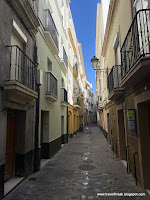
Streets of Cadiz
Cadiz was a nice seaside resort town on the Atlantic ocean. It’s almost an island by itself. Cadiz has both an old town, and a more modern resort side to it. The old town was quite small and slow, with more white than yellow houses. It has a bit of history, apparently being the oldest city in Western Europe. There was one main church, a few castilles, a few squares and some other places to see. It is really very small though, with very old buildings and very narrow roads (It was where the Pathaan song was shot recently).

Cathedral of Cadiz
We were staying at the Monte Puertatierra Hotel, just one lane away from the sea. It was in the transition zone between the old and the new Cadiz. From our hotel started the more modern buildings, the hotels, holiday homes and the restaurants. And so the area around the hotel felt a lot more open than the old town. 

Main road, Cadiz
One of the days, we walked into the old town. I ran along the coast and onto one of the forts into the water, the Castillo de San Sebastian. We sat next to the rocks there for a while, watching the waves crash into the rocks. Then we walked in to the town centre and walked past some stunning squares in the city centre including the Plaza de San Juan de Dios, eating at one of the restaurants around. (This square is also in the Pathaan song). There was a local market there and the vibe was quite lively, with lot of people just sitting outside and having a nice time. As we walked back, we walked past the port which was full of cruise ships of that day.

One of the evenings, we walking towards the old town and saw a group of people practicing in a band together for a few hours right next to the sea. At 10 pm! Its sound could be heard all around town, and provided a nice ambience for our walk around.

The next evening, we walked all along the waterfront, till the end of the promenade. It was a nice walk with lights and palm trees all along the beach on the waterfront. And resorts, hotels and holiday homes lining it. There were some very nice restaurants along the water. Most of them used to be empty though when we used to go out for dinner, at 7 pm 😊.

The beach and beach restaurants were good too, though not a lot of people were in the water as it was too cold (still around 20 degrees!). When I went in, I found it quite warm actually and good for swimming. I guess people here are quite spoilt with really warm weathers and waters, that they actually give up on swimming when it turns just a tad cold 😉.

Sunsets in Cadiz
We saw some gorgeous red sunsets while walking along the beach everyday. At night, we again saw the sun and moon together at the same time, it was quite a regular occurrence in Spain surprisingly. Also we kept noticing the phase of the moon everyday as it got to a full moon by the end of the trip. It looked lovely with its reflection on the water as we walked at night every day. Overall, I thought Cadiz was a nice resort town to relax, but it was too touristy and modern for my taste. Tarifa though where we went to next had the right balance.


Map


Part 2: Cadiz to Marbella

Saturday, March 18, 2023

A week along the Turkish coast - Kas and Cesme


Part 1: A week in Istanbul and Cappadocia

After a week inland in Istanbul and Cappadocia, we spent the next week of our Turkish vacation along what is known as the Turkish Riviera or the Turquoise Coast, along the towns of Antalya, Kas, Kalkan and Cesme. It was a completely different experience to the first week, with its coastal vibe, blue waters and relaxed air. (Also after a bit of research, I realised that I have already been to the British, French, Italian, Swiss, Dutch, American and Mexican rivieras before, with the Turkish one being the latest addition to the list 😊)

The itinerary during this part of the trip was

Day 1-8: Istanbul and Cappadocia
Day 9: Drive from Antalya to Kas (4 hours), stay at 3 house apart; Stop at Cirali beach and coves along the way
Day 10: Kas: Day boat tour to 4 swim sites, a sunken Roman city and Kalekoy village
Day 11: Kas: Visit Kalkan, Kaputas beach
Day 12: Drive to Cesme (6 hours), stay at Radisson Blu Resort
Day 13: Cesme: Visit Alacati
Day 14: Cesme: Explore Cesme
Day 15: Drive to Istanbul (6 hours), fly to London


Day 9: Drive to Kas (4 hours), stay at 3 house apart; Stop at Cirali beach and coves along the sea

We didn’t spend much time in Antalya and very soon in the morning started driving along the Turkish Riviera towards Kas. It was quite a scenic drive all along brown bare mountains, with some small patches of greenery. The water all along was the deep blue Mediterranean colour. (Apparently the water in this sea is deep blue because it lacks the nutrients required by algae to grow, so the water is better able to absorb and scatter sunlight and give off its typical vibrant blue appearance). There were also some 100s of beaches and Roman ruins along the route, though we didn’t stop at any of them. Still they were tempting, and its amazing how much history Turkiye has, starting from the Greek and Roman civilisation.
 
Cirali Beach
As it was quite a short drive to Kas, we stopped at a few spots on the way. The first was Cirali beach. It was quite a lucky find as it was a bit off from the highway, and turned out to be a world onto itself. It had high green mountains on the one side, the deep blue water on the other. And a long white sandy beach in between. It was lined with restaurants and hotels along the road, but it still felt quite secluded as it was off the typical tourist route. So we got a chance to swim and lay on this long huge beach with white sand, blue waters and very few people. It was awesome.
 
Random cove
As we drove further between the hills and the sea, there was a cove where we saw a few people swimming in the open sea. There was something so enticing about the view, that we also stopped there and swam and snorkelled for a while. And this was the start of a surreal stay along the coast. Thereafter, every turn brought a new spectacular view. Sometimes a beach, sometime a rokcy cove. Places where we could just stop and swim and snorkel, in the deep blue Mediterranean blue. It was just so heavenly.

View from airbnb during day
Very quickly though, we reached our Airbnb which was located on a mountain overlooking the sea. It was a bit outside the village, in a residential area. And had an imposing view of the sea far off, which included some Turkish and some Greek islands. This Airbnb was the best place I stayed at during our entire vacation, it was even better than the 5 star hotels. It had a pool, lot of greenery, grapes and other fruit plants and a view of the vast world below. We could see Kas village, an extension of the village and many islands in the sea. This view was the best part of the apartment, and I fell in love it it very soon. It was a bit warm though as it was on the top floor. But totally worth it for the view and the sun.

After settling in, we went into the village to shop for groceries as well as to have dinner. Kas is more a locals' village than a touristy one. Surprisingly it is not as well known among tourists as among the locals who spend their summers here. And that was clear as we walked around, there was loads to do but it was mostly Turkish people around.

The first evening, we walked in to the city centre and along the waterfront. It was so lively, full of shops, with people everywhere, shopping, eating and so on. It was quite overwhelming too, with its energy. We finally ate at a vegan restaurant which had a long queue. And the food was less Turkish than we could have hoped for. But it was nice to sit by the harbour and eat, with the boats bobbing up and down in the water all around.

We then walked by a long line of boats trying to book passengers for the full day boat ride the next day. We were tempted but weren’t sure if to go or not. Finally we decided to. We also decided that Kas was too great to leave within a day, so we even cancelled our stay in Pamukkale the day after which is apparently quite a tourist puller, so that we could stay longer at Kas. And it was totally worth it.


Day 10: Kas: Day boat tour to 4 swim sites, a sunken Roman city and Kalekoy village

This day was the highlight of the trip for me, and encompasses the essence of what the Turkish Riviera stands for. We started early and got to our boat in Kas by 930 in the morning. The village was totally empty and it looked nothing like the night before. We got to the waterfront and could see all the boats ready to leave with their passengers, each with their own plan for the day.

We got onto this huge boat @Simenaboats, with some 20-30 people and then spent all day on it. The captain took us to some 4 swimming sites, showed us a sunken Roman city and dropped us for a while at a village which wasn’t reachable by car. And all day, the same sequence repeated again and again. He would take us to a swimming cove, stop, then everyone would jump into the water and swim for an hour or so, we would come back on the boat, dry ourselves in the sun, eat something, he would take off for the next step and then repeat. It was quite an enjoyable though tiring day, and I enjoyed it completely - the swimming, the sunning and the relaxing.
 
Islands around Kas
While on the boat, we sat on the top and gazed at the different islands and rock formations all around. We lay on the sunbeds with the sun giving warmth and the wind some coolness. The first stop we stopped at was Inonu Noyu. It had clear turquoise waters, and we could see all the way till the bottom of the ocean, with all the rock formations below. It was amazing to swim there. Many other boats also came there and anchored, and suddenly the place would fill up with tourists.

Swimming sites
The other stops we went to were the Akwaryum Koyu, Tersana sunken city cove and Camlik Bay, Each was stunning and lovely to stop and swim around. At the Tersana spot, we could see the Roman stone ruins all along the land on the side. During our last 2 spots, there was another boat going to those places at the same time as us, and they had too many passengers. The moment they would reach it felt like the place was full of loud people. We started trying to avoid swimming after that boat came in 😊.

Batik Sehur
Sunken Roman city
On the way, we also saw the sunken city, Batik Sehur which sunk below sea level due to an earthquake. It was interesting to see some of the remains of the Roman baths, and other walls so clearly under the sea. We also stopped at a village called Kalekoy which was famous for its ice-cream. And surprisingly, it was great. We walked around a bit, and tasted the famous tasty ice-cream. There were lot of fruit trees here too.
 

Kalekoy village
The boat ride also included lunch and tea for the day and I loved the home made Turkish food provided by them – apparently the Captain’s wife made it herself. It was the best Turkish meal I had had in Turkiye. So spicy and tasty, just amazing. My parents also loved the Turkish tea on the boat. We later went looking for those flavours too, trying to find them in town.

While on our boat ride, we saw some people who were living on a boat and touring the coast. They would jump in to the water and swim whenever they felt like – it looked fun. Also during our tour, one old woman came floating in a boat and was selling her herbs and spices to the chefs on the boats. It was a bit heart wrenching to see such an old person having to row so much out to sea to sell her wares.

After the swims, we ended the day, around 6pm. We were really tired by the end. We had ended up having a great day, also thanks to the Captain who was very friendly and helpful. It was definitely the highlight of the Turkish Riveria for me.

View at night
We stopped a bit longer in the local Kas market, trying to buy some local stuff. But we were so tired, we retired early to our apartment. We swam in its pools and just enjoyed watching the slow sunset across the islands. And then the twinkling lights coming up slowly. The view from the apartment was to die for and made the evenings very calm and beautiful. 


Day 11: Kas: Visit to Kalkan, Kaputas beach

On the extra day we got in Kas after cancelling Pamukkale, we didn’t do a lot actually. We drove to the nearby village of Kalkan, which was completely different from Kas, stopping on a beach on the way. And once back to our Airbnb, we just walked around nearby to get a feel of the area.

Kaputas beach
The drive to Kalkan was as expected – in the mountains, next to deep blue waters, with a cool wind blowing. It was quite a spectacular drive. On the way, we first stopped at the Kaputas beach which I had heard a lot about. It’s all the way down a cliff, in a cove and was supposed to be the best beach of the area. So we stopped there and it was quite a steep walk down. To be honest, I wasn’t impressed. It was definitely a good beach but nothing spectacular - it just felt like all the beaches around. It’s location was definitely insta worthy, but that’s it. And it was extremely busy, even though we had gone quite early.

We spent some time swimming there, which felt nice as the day had got really hot. And the water was so clear till very far into the water, even when it was deep. You could see all the way till the bottom but not touch it.

Our next stop was the village of Kalkan which was a relatively posh village, with many holiday homes, mostly new buildings. It was more spaced out too, and didn’t feel too old – quite modern actually. We also found some Turkish hamam places here which we couldn’t in Kas.

Apparently, this village is quite popular with British and other international tourists to have their holiday homes at. There were more British citizens in this village than Turkish people! And that’s why, more people spoke English here, the shops were different, and everything was more posh, while Kas was more Turkish, where local people lived and worked. It’s so interesting how within some 30 kms, two villages can look and feel so different.

My father went to the beach for a while and liked it. And we experienced the Turkish hamam and liked it too. But as it was so hot that day, we decided to call it a day soon without exploring Kalkan and came back to our Airbnb for an afternoon siesta. We finally enjoyed our own Airbnb and views from it in the evening. We also walked down to the Aksagerme beach which was right where the road turned towards our Airbnb and watched a wedding reception happening there.

I also went for a run along the waterfront, almost till Kas. It was a fun run, though a bit tough in the humid heat. The lights of the village, the houses in the cliffs and the islands all lit up, made it quite a charming scene. 

It was interesting to see though, the whole road was lined with people in their caravans, who had come for a nice evening next to the water. They were all sitting outside in the evening breeze, some in the water, some just on the road and all had their barbeques going on, till late at night. We even saw some people swimming till 9 pm! It definitely felt like a relaxing place to be.


Day 12: Drive to Cesme (6 hours) stay at Radisson Blu Resort

The next day was quite an uneventful day, a full day of driving all the way from Kas to Cesme. Most of the drive was again along the coast, with mountains on one side and deep blue Mediterranean Sea on the other. It was a spectacular view but to be honest, it had become a daily occurrence by now😁. So we noticed it a little less today. We drove through some huge green valleys with pretty villages.

In between we stopped at a local stall for some fresh juice. And also at a local eating place, like a dhaba, with some very tasty food served very cheap – rice, yoghurt and rajma! We also drove past Izmir, which was this huge city right next to the sea. It felt a bit like Bombay, with all its high-rises and the waterfront in between.

We then turned towards Cesme which was on a peninsula, jutting out into the Aegean sea. Suddenly the quality of highways, quality of houses and everything around changed. It was clear that this was where the rich Turkish people holidayed. The coastal road had been a two lane road, but here it had turned into a motorway with fast traffic.

Cesme was richer and greener than Kas. It was full of holiday homes, with avenues lined with palm trees, loads of restaurants and resorts everywhere. The roads were wider and better maintained, with lot of buildings everywhere. The weather also became cooler here and the sea less blue (Aegean sea is different than the Mediterranean in its colour and character).

The hotel
In Cesme, we were staying at the Radisson hotel, which was a huge resort hotel on the beach. It had a few swimming pools, and a lot of activities everywhere. And all around it, were holiday homes surrounded by palm trees. The whole experience here was very different than all the other places we had stayed during this trip.


Day 13 and 14: Cesme: Visit Alacati, explore Cesme

The first half of the day, we spent in the hotel itself, in the various spa facilities they had, the 4 pools and the sea. It was a great hotel to enjoy and a lovely warm day to boot. It was a bit windy though. The beach was shallow till far. And the variety of pools was good to shift from warm to cool to the herbal ones – depending on your mood at the time.

Streets of Alacati
The second half of the day, we went to Alacati, a nearby town. The town looked quite normal initially, with the usual modern houses, shops et al. But the city centre was something else. Apparently it was a Greek town for a very long time, and the old town still retains the same feel to it. So the city centre was all white, with old Greek stone houses with blue doors and lot of bougainvillea everywhere.

Greek streets of Alacati
It felt like we had come to a different world altogether, a slow place, with white stone houses, lots of shops and just a lot of walking to do. The place was full of tourists and there were many restaurants to just sit and have a nice day. We shopped a bit, but for the rest of the time just walked around, enjoying the various small streets and views. Every street had its own flowers, which added a lot of charm to it. We also went up to the old windmills, to get a birds eye view of the area around.

We ate food at Salkim Sorgut and it was quite tasty. Interestingly, the only other guests at restaurant were also a group of Indians 😊. We had a lovely evening in the place, it was so charming. And it also helped that the weather was perfect, neither hot nor cold.

Radisson Blu
One of the next days we went out to Cesme town to do some small shopping. It was quite crowded and full of people – it felt like a popular tourist place for sure. We ate at a boutique small place which offered homemade Turkish food but it’s sad that it was the worst food of our whole trip. It’s also interesting how even good reviews can lead to bad places. Anyways, we spent the rest of the day in the pools and spa of our hotel, and were ready to say goodbye to Cesme (and Turkiye) soon.


Day 15: Drive to Istanbul (6 hours), fly to London 

The last day was just a mad dash to the finish. We left early, to reach Istanbul before our flight and it helped that the entire route was through highways. The roads were perfect and we beat the Google Maps time too. Though we kept driving without a lot of breaks. All the roads on this route had tolls which were totally worth it.

The landscape was gorgeous, it was more green this side of the country. There were stunning valleys full of agriculture. And nice charming towns and villages on hilltops on the way. We stopped only once at a service stop on the way. Closer to Istanbul, we took the farthest bridge on the Bosphorus to make it to the airport in time, driving along the Black sea. And as usual, I was surprised with how lavish this place is. We again passed by small settlements which felt quite exclusive and posh. And we made it to the airport in time, to fly back to London.


Some impressions of the country

I have wanted to tour Turkiye for quite some time. I had read so much about the country, that I wanted to go beyond the capital Istanbul. And it did not disappoint. I loved it, its culture, its vibrancy, its history and the lovely Turkish Riviera. I can definitely see myself coming back here more, just to relax.

Here are some thoughts on what I saw and felt
  • The whole country felt really like somewhere in between Europe and Asia. It still had some of the chaos and flexibility; the colours and vibrancy of Asia. As well as the good infrastructure and development of Europe. It had so many beautiful villages on the sides of the road and each one was so picturesque and very clean – such a stunning country
  • Turkiye has everything – vibrant and varied nature – mountains, seas, coast, beaches, desert, salt lakes and forests; huge cities and charming villages; history from the Greeks to the Romans to Byzantines to Ottomans to now; its own unique culture and spectacular landscapes to drive through. The whole Mediterranean coast is crazy – there are ruins every 15 mins from Greek and Roman times. It's mind-blowing how much history, culture and things to do there are in Turkiye
  • Agriculture is everywhere. We saw so many gorgeous fields on our drives – sunflower, wheat, maize, kale chane, and so on. And we also saw so many fruit trees either on our hikes or places we stayed in, like grapes, figs, lemons, oranges, peaches, plums, melons, walnuts, cherries, pomegranate, tomatoes and so on. We also sometimes just plucked a few and had them fresh from the trees. And I was amazed by the number of greenhouses everywhere. It was all really nice to see
  • There was so much of good handicraft ware everywhere, all shops were full everywhere. It was a treat to the eyes to see it all. The shopkeepers don't bargain a lot though which was surprising
  • We saw a lot of Indian tourists both in Istanbul and Cappadocia, but not in the coastal areas, in Kas or Cesme. It was clear which were the more touristy areas 😉. And the same went for Indian food, we didn’t get any more Indian food once we got to the coast
  • People felt quite European here. They are on time. There wasn’t a lot of cheating or bargaining here (except of course taxi drivers in Istanbul). Overall, the status of life looked ok but of course, we saw some poverty around. And saw some old people having to work (the toughest scene was when a very old woman came in her boat to where our boats were, to sell herbs. She was so old, it felt very risky to be out at sea so far, all alone)
  • Overall Turkish people are not too friendly. They are polite but don’t really go out of their way to help you. Also, they smoke too much, all the time
  • People really don't know English much. Nothing was written in English anywhere, and we had to translate everywhere. In fact, at a few spots, some cops stopped our car but let us go without checking anything when we started with, "English?"
  • The local Turkish dogs are so huge, like really huge. We saw a few of them on our travels. Also there were lots of cats everywhere. Just like in Greece
  • The highways were fabulous – they connected all the main cities, and were completely new. It was a pleasure to drive there. The drivers though were less so, they drove more like Asia 😉. Overtaking, speeding and all was common. Also an interesting difference of driving in Turkiye is that the police place paper cut - outs looking like police cars all along the highways, full with blinking lights. It was really tough to figure out which were the real and which the fake cars
  • We started our trip from Istanbul, drove around in a circle and flew out from Istanbul. One can always fly between the places or drive in one direction and fly back out from Izmir or Capadoccia or Antalya. This change in itinerary saves one long day of driving
  • If I have to post the trip make a change to the itinerary, I may not have gone to Cesme. As Cesme was quite a similar seaside resort to Kas. So I would have just stayed in Kas longer, then gone to Pamukkale and back. Driving to Cesme took an extra day and it was quite similar to Kas
  • In Capadoccia we stayed in the centre of the Goreme National Park in a cave house. I felt that living in a cave house was overrated, and the main villages were too crowded. Next time, I would stay outside of the park, maybe in the town of Urgup
  • And as always, here is a list of many other places on this route that we could not visit. Cappadocia - Cavusin, hike along the canyon to see balloons in the morning; Antalya – Hadrian’s Gate; Kas - Meis, Greek theatre; Along the coast - Pamukkale, Ephesus, Fethiye, Dalaman, Kusadasi; Bodrum and around - Datca, Palamutbuku, Gocek, Selçuk; Izmir

Overall, I loved the vacation and see myself coming back again.

Map of the drive